
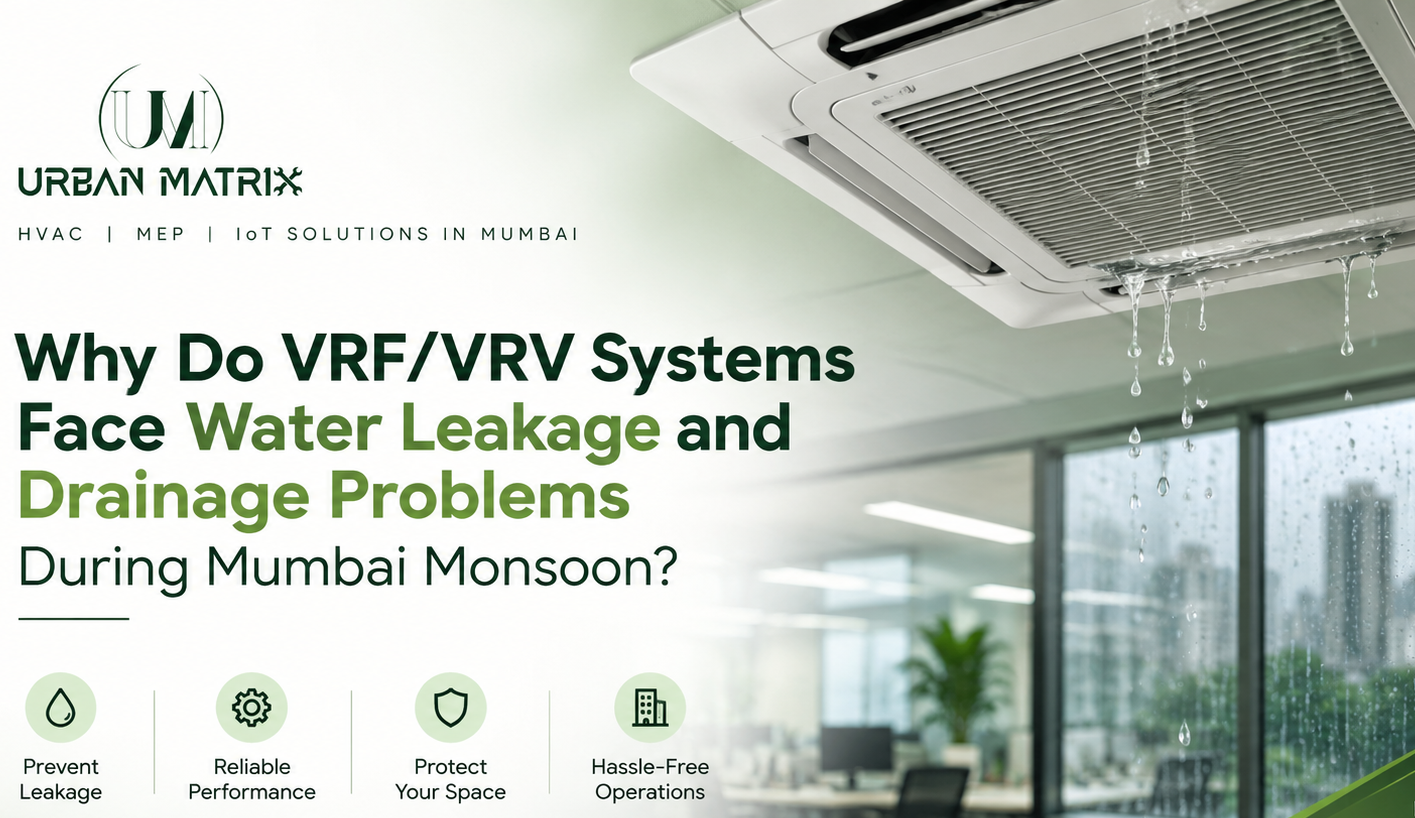
Mumbai’s monsoon can expose HVAC problems that remain unnoticed during the rest of the year. One of the most common complaints in commercial offices is simple: “The AC is cooling, so why is water suddenly dripping from the ceiling?” In many cases, the issue is not the cooling itself. It is the condensate drainage system. High humidity means an air-conditioning system has more moisture to remove from indoor air. If a drain pipe is partially blocked, the drain pump is weak, insulation is damaged, or the drainage slope is incorrect, that extra condensate can expose the problem quickly. This is why timely VRF AC repair in Mumbai becomes especially important during monsoon. Ignoring a small drainage issue may eventually lead to ceiling stains, damaged interiors, mould, electrical risks and disruption inside the workplace. For businesses using VRF or VRV systems, regular inspection is often much easier than dealing with water dripping over workstations, reception areas or expensive equipment later. Why Do VRF/VRV Systems Develop Drainage Problems During Monsoon? VRF and VRV systems can face drainage problems during monsoon because high humidity increases condensate formation. Blocked drain lines, incorrect drainage slopes, faulty drain pumps, dirty drain pans and damaged insulation can prevent water from draining correctly, resulting in AC water leakage, ceiling stains, unpleasant odours and indoor moisture problems. What Are VRF/VRV Drainage Problems? VRF, or Variable Refrigerant Flow, systems use multiple indoor units connected to an outdoor system. VRV is a commonly used term for the same general type of variable-refrigerant technology. During cooling, indoor units do more than lower room temperature. As humid air passes over the cold cooling coil, moisture from the air condenses into water. That water is collected in a drain pan and should move safely through a condensate drain pipe. If the drainage system cannot handle or remove this water properly, AC water leakage may occur. Manufacturer installation guidance stresses that condensate drain piping should have a proper downward slope and that drainage should be tested to confirm water flows smoothly. Guidance also warns that inadequate insulation in very humid environments can contribute to condensation problems. That is why a drainage inspection should be part of VRF AC maintenance, especially before and during Mumbai’s monsoon season. What Causes VRF/VRV Drainage Problems During Mumbai Monsoon? Several problems can contribute to water leakage. Sometimes there is one obvious fault. In other cases, two or three small issues are happening together. The U.S. EPA recommends keeping indoor relative humidity below 60%, and ideally between 30% and 50% where practical, because excessive moisture increases the risk of condensation and mould. It also specifically recommends keeping HVAC drip pans clean and drain lines unobstructed. Monsoon water leakage is not always a major VRF failure. It may begin with a blocked drain, weak pump, damaged insulation or incorrect drainage slope. A professional inspection helps identify the actual cause before unnecessary replacement work is considered. How Does VRF AC Repair in Mumbai Work for Drainage Problems? A proper inspection should go beyond simply cleaning the visible drain outlet. Step 1: Identify the Source of Water First, the technician checks whether the water is actually coming from the indoor VRF unit, condensate piping, insulation, surrounding plumbing or another building service. This matters because every ceiling leak near an AC unit is not automatically an AC fault. Step 2: Inspect the Drain Pan The drain pan is checked for standing water, dirt, cracks, microbial buildup and overflowing. If water is collecting faster than it can drain, the technician needs to identify why. Step 3: Check the Condensate Drain Line The drain line is inspected for: Professional VRF AC service in Mumbai should also verify whether water is flowing smoothly after cleaning. Step 4: Check the Drain Pump If the indoor unit uses a condensate pump, technicians check whether the pump is receiving power, operating correctly and removing water at the required rate. A malfunctioning float switch or drain pump can sometimes trigger error codes or cause the indoor unit to stop. Step 5: Inspect the Cooling Coil and Airflow Poor airflow can affect coil conditions and overall system performance. Technicians may therefore inspect filters, cooling coils, blower operation and airflow rather than treating the drain line as an isolated component. Step 6: Inspect Insulation Wet, damaged or poorly sealed insulation can create visible dripping that may look like a blocked drain. This is particularly important in Mumbai’s humid conditions. Step 7: Test the System After corrective work, the system should be operated and the drainage path checked again. The goal of VRV AC repair in Mumbai is not simply to stop today’s leak. It is to understand why it happened and reduce the chance of it returning. What Are the Benefits of Preventive VRF AC Maintenance? Regular VRV VRF maintenance can help commercial facilities by: For a busy commercial property, prevention can also mean fewer complaints from employees, tenants and customers. Reactive Repair vs Preventive AMC vs IoT Monitoring Approach What Happens Best Use Reactive AC repair Technician visits after leakage or failure occurs Sudden breakdowns and emergency problems Preventive VRF maintenance Drainage, coils, pumps, controls and system condition are checked periodically Offices and commercial facilities wanting fewer breakdowns HVAC AMC Scheduled maintenance across HVAC equipment throughout the year Larger commercial properties IoT-based monitoring Operating parameters, alarms and selected equipment conditions can be monitored digitally Facilities requiring greater visibility and proactive maintenance A combination of physical inspection and intelligent monitoring can be useful for businesses searching for HVAC MEP & IoT Solutions in Mumbai rather than treating each breakdown separately. Who Needs VRF AC Repair and Preventive Maintenance? Professional maintenance is particularly useful for buildings with several indoor VRF/VRV units or areas where even a small water leak could interrupt daily operations. This may include: Properties already noticing ceiling stains, dripping water, musty smells, repeated drain blockages or AC error codes should consider an inspection instead of waiting for the problem to become more serious. Businesses searching for commercial AC repair in Mumbai
Post-Monsoon HVAC Checklist: What Mumbai Commercial Buildings Should Inspect Before Winter
Cleaning HVAC filters is an important maintenance step, but it does not always solve cooling or efficiency problems. If your system is still underperforming, there may be other issues such as dirty coils, restricted airflow, refrigerant problems, duct leakage, or faulty controls. Understanding why filter cleaning alone does not improve HVAC performance can help facility managers identify the real cause of poor cooling instead of repeatedly treating only one part of the system. For commercial buildings in Mumbai, a complete HVAC inspection can help improve airflow, energy Here’s a simple checklist to start with. 1. Check the HVAC Filters Filters are usually the first thing teams inspect, and for good reason. During the monsoon, dust and moisture can build up faster than expected, which may restrict airflow and reduce cooling efficiency. Check whether filters need cleaning, replacement or more frequent attention. A reliable HVAC contractor in Mumbai can also help ensure filter maintenance is part of a complete system check rather than the only step taken. 2. Inspect AHUs and Airflow After the monsoon, AHUs should get more than a quick visual check. Look at cooling coils, blowers, belts, bearings, drain trays and condensate lines. Also check whether airflow feels consistent across different areas of the building. If one zone is too warm while another is too cold, the issue may not be the thermostat. It could be related to airflow, balancing or AHU performance. Regular commercial HVAC services in Mumbai can help catch these issues before they start affecting comfort and energy consumption. 3. Don’t Ignore the Cooling Tower Cooling towers often work quietly in the background, which is why small problems can go unnoticed. Regular cooling tower maintenance services in Mumbai can help identify issues like scaling, clogged nozzles, uneven water distribution, reduced airflow, and declining cooling efficiency before they affect the overall HVAC system. After the monsoon, check for: If the cooling tower is not working efficiently, the rest of the HVAC system may have to work harder. That can eventually show up as higher energy bills or reduced cooling performance. Including cooling tower checks as part of HVAC AMC services in Mumbai can help avoid these issues. 4. Check Electrical and MEP Systems Too Post-monsoon maintenance should not stop at HVAC. Moisture can also affect electrical panels, pumps, motors, wiring, plumbing lines, contactors and control systems. This is where integrated HVAC and MEP solutions in Mumbai make a difference. A proper post-monsoon check should cover: Experienced MEP consultant in Mumbai can help facility teams identify connected issues instead of looking at each system separately. For offices and commercial buildings, regular MEP maintenance services in Mumbai can also reduce the risk of sudden breakdowns. 5. Look for Moisture, Leakage and Drainage Problems Mumbai’s humidity can create problems that are easy to miss. Check equipment areas for blocked drains, water leakage, damp insulation, condensation or signs of corrosion. A small moisture issue may not look serious today, but over time it can affect equipment life, indoor comfort and maintenance costs. That’s why preventive maintenance services in Mumbai are especially important after the rainy season. 6. Compare Your Energy Consumption One of the easiest ways to spot an efficiency problem is to look at your energy usage. If occupancy and working hours are almost the same but electricity consumption has gone up, your HVAC system may be working harder than it should. Possible reasons include: Using IoT solutions in Mumbai can help facility teams understand what is happening between routine service visits. With IoT-based HVAC monitoring solutions in Mumbai, unusual energy consumption or equipment behaviour can be spotted earlier. 7. Use IoT Monitoring to Stay Ahead of Problems Most maintenance problems do not appear overnight. There are usually small warning signs first. IoT monitoring can help facility teams track things like temperature, equipment runtime, energy consumption, operating status and system alerts. With MEP system monitoring in Mumbai, teams can identify unusual patterns earlier instead of waiting for a complaint or breakdown. For commercial properties, IoT solutions for commercial buildings in Mumbai can make maintenance more proactive and easier to manage. 8. Review Your AMC An AMC should not only mean calling someone after something stops working. A good maintenance plan should include regular inspections, preventive servicing, equipment health checks and performance monitoring. Businesses using commercial HVAC AMC services in Mumbai or MEP AMC services in Mumbai can reduce the chances of unexpected downtime. Working with a reliable HVAC consultant in Mumbai that can handle installation, maintenance, AMC and monitoring under one approach can also make facility management simpler. Why an Integrated HVAC, MEP & IoT Approach Helps In a commercial building, systems are connected. An HVAC problem may be linked to a pump, electrical component, cooling tower, sensor or water system. That’s why looking at the complete building system often gives better results than fixing one component at a time. With HVAC MEP & IoT Solutions in Mumbai, India facility teams can bring together HVAC maintenance, MEP maintenance, AMC, energy monitoring and IoT-based alerts under one strategy. The goal is simple: identify problems earlier and keep the building running efficiently. Before You Finish the Post-Monsoon Check Ask your facility team a few simple questions: Is the airflow consistent across all areas? Has cooling performance dropped recently? Are AHUs and cooling towers being checked properly? Has energy consumption increased without a clear reason? Is maintenance mostly preventive, or do you usually act after a breakdown? Most importantly, do you know how your HVAC and MEP systems are performing between service visits? At Urban Matrix, we provide HVAC solutions in Mumbai, MEP solutions in Mumbai, HVAC installation services in Mumbai, commercial HVAC services in Mumbai, AMC solutions in Mumbai and IoT solutions in Mumbai for commercial buildings. The idea is not just to fix problems when they happen. It is to spot them earlier, maintain systems better and keep building operations more reliable. Why Filter Cleaning Alone May Not Improve HVAC Performance You cleaned the HVAC filters, but the cooling
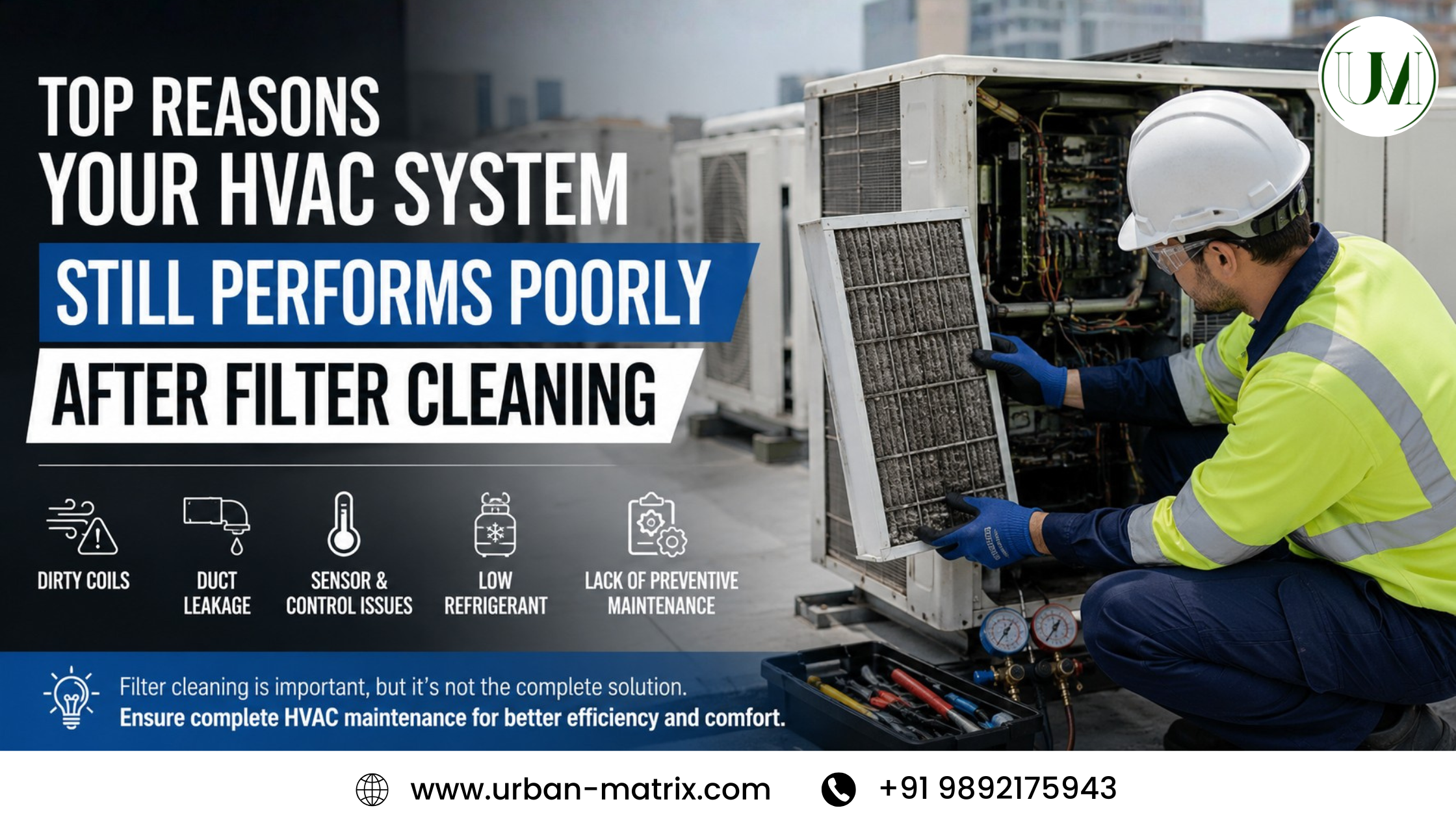
Top Reasons Your HVAC System Still Performs Poorly After Filter Cleaning?
Top Reasons Your HVAC System Still Performs Poorly After Filter Cleaning? Filter cleaning is important, but it is not a complete solution for every HVAC problem. Many commercial buildings, offices, hospitals, retail spaces and industrial facilities in Mumbai still face poor cooling, high electricity bills, low airflow and repeated complaints even after regular air filter cleaning. This is where professional HVAC, MEP & IoT Solutions in Mumbai become important. A commercial HVAC system is connected to multiple parts such as coils, ducts, refrigerant lines, electrical panels, sensors, controls, drainage systems and MEP infrastructure. If any one of these parts is not working properly, the system may still perform poorly even when the filter looks clean. For facility managers and business owners, understanding the real reason behind poor HVAC performance can help reduce downtime, improve comfort and control energy costs. Your HVAC system may still perform poorly after filter cleaning because the issue is not always limited to the air filter. Dirty coils, duct leakage, low refrigerant levels, blocked drain lines, faulty sensors, poor thermostat calibration, electrical load issues, humidity problems and lack of preventive maintenance can all reduce HVAC efficiency. For commercial buildings in Mumbai, a complete inspection by a reliable HVAC maintenance company in Mumbai can help identify the actual cause and improve system performance. Key Takeaways Why HVAC, MEP & IoT Solutions in Mumbai Matter After Filter Cleaning In many commercial buildings, the first response to poor cooling is simple: clean the filter. This is useful, but it only solves one part of the problem. A commercial HVAC system works like a connected network. Air filters, coils, ducts, AHUs, FCUs, VRF systems, chillers, drain lines, sensors, electrical systems and controls all need to work together. If one part is weak, the entire system can become inefficient. This is why businesses now look for complete HVAC, MEP & IoT Solutions in Mumbai instead of only basic filter cleaning. HVAC takes care of cooling and ventilation. MEP supports electrical, mechanical and plumbing-related building performance. IoT adds smart monitoring, data tracking and predictive maintenance. Together, they help facility teams move from complaint-based maintenance to performance-based maintenance. 1. Dirty HVAC Coils Can Still Reduce Cooling One of the biggest reasons for poor HVAC performance after filter cleaning is dirty coils. Even if the filter is clean, dust and dirt may already be deposited on the evaporator coil or condenser coil. Why it matters The evaporator coil absorbs heat from indoor air. The condenser coil releases heat outside. When these coils are dirty, heat transfer becomes weak. As a result, the system runs for longer hours but gives less cooling. Common signs of dirty coils For commercial properties, evaporator coil cleaning and condenser coil cleaning should be part of regular preventive HVAC maintenance. 2. Low Airflow May Come From Duct Leakage or Blockage Many people think low airflow means the filter is dirty. But after filter cleaning, if the airflow is still weak, the problem may be inside the ducting system. Duct leakage, blocked ducts, damaged insulation or poor duct design can reduce the amount of conditioned air reaching the required area. This is a common issue in offices, showrooms, malls, hospitals and commercial buildings. Example A corporate office in Mumbai may clean its HVAC filters every month, but if the duct joints are leaking above the false ceiling, a large amount of cooled air may escape before reaching the workstations. Employees may complain about poor cooling, while the system continues consuming more electricity. This is why commercial HVAC services in Mumbai should include duct inspection, airflow testing and insulation checks. 3. Low Refrigerant Level Can Affect Cooling Efficiency If your HVAC system is still not cooling properly after cleaning the filter, low refrigerant level can be another reason. Refrigerant is responsible for absorbing and transferring heat. When the refrigerant is low, the system cannot cool effectively. Causes of low refrigerant Warning signs Low refrigerant should not be treated as a simple refill job. The leak must be detected and repaired properly. 4. Thermostat Calibration and Sensor Issues Can Disturb Performance Sometimes the HVAC system is mechanically fine, but the controls are not working properly. Faulty sensors, wrong thermostat placement or poor thermostat calibration can confuse the system. For example, if the thermostat is placed near a heat source or direct sunlight, it may read the wrong temperature. The HVAC system may overcool or undercool the space. Common control-related problems This is where smart HVAC monitoring in Mumbai and IoT based HVAC monitoring for commercial buildings can help. IoT sensors can track temperature, humidity, airflow, energy use and system performance in real time. 5. Electrical and MEP Issues Can Increase HVAC Load HVAC performance is not only about cooling equipment. It also depends on the supporting MEP system. Electrical panels, cables, breakers, earthing, control wiring, pumps and drainage systems all affect the performance and safety of HVAC operations. A weak electrical connection, overload condition or control panel issue can reduce efficiency and increase downtime risk. This is why businesses should work with a professional MEP contractor in Mumbai or a complete HVAC and MEP maintenance company in Mumbai for commercial building maintenance. Many people search for Hvac contactor in mumbai or Mep contactor in mumbai, but the correct terms are HVAC contractor in Mumbai and MEP contractor in Mumbai. A qualified contractor can inspect both HVAC equipment and the supporting MEP system. 6. Drain Line Blockage Can Affect Indoor Comfort Drain lines remove condensate water from HVAC systems. During Mumbai’s humid weather and monsoon season, drain lines can get clogged due to dust, algae, sludge or poor slope. A blocked drain line can cause leakage, water dripping, ceiling damage and humidity problems. Even if the filter is clean, the indoor environment may still feel uncomfortable because humidity is not controlled properly. Signs of drain line issues For Mumbai commercial buildings, drain line inspection is especially important before and during monsoon. 7. High Humidity Can Make Cooling Feel Weak In Mumbai, humidity plays
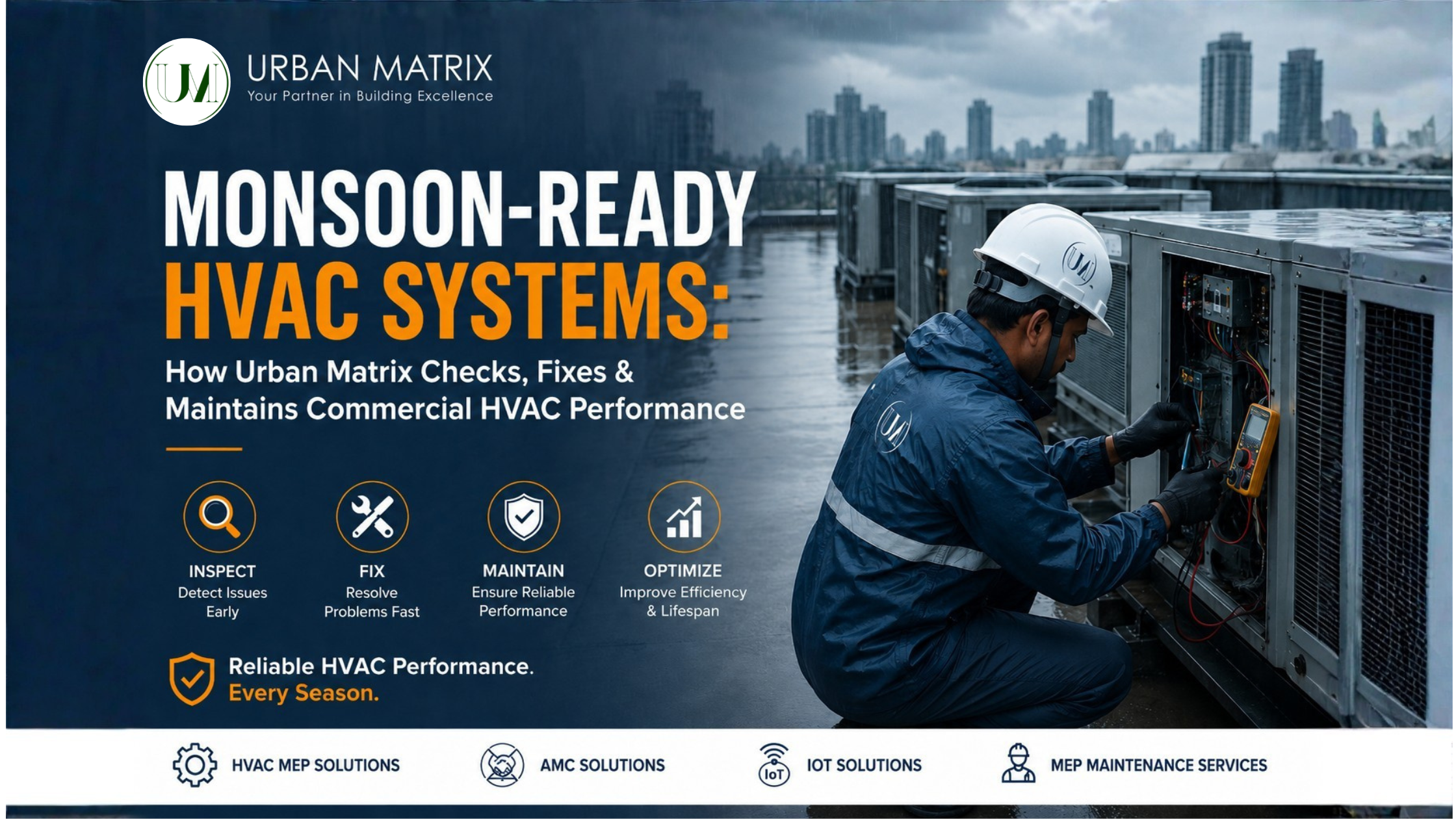
How Does Urban Matrix Make HVAC Systems Monsoon-Ready for Better Commercial HVAC Performance?
How Does Urban Matrix Make HVAC Systems Monsoon-Ready for Better Commercial HVAC Performance? Mumbai’s monsoon can expose weak HVAC systems faster than most commercial buildings expect. One week the cooling feels normal, and the next week there is water leakage, poor airflow, bad smell, high humidity, electrical tripping, or sudden breakdown. For offices, malls, hospitals, hotels, retail spaces, commercial complexes, and industrial facilities, HVAC failure during the rainy season is not just a comfort issue. It can affect employee productivity, customer experience, indoor air quality, equipment safety, and energy consumption. This is where planned HVAC MEP Solutions become important. A monsoon-ready HVAC system is not only about servicing the AC before rain starts. It is about checking drainage, airflow, electrical safety, coils, filters, humidity impact, corrosion risk, and overall building HVAC performance. Urban Matrix helps commercial buildings in Mumbai with professional HVAC inspection services, HVAC maintenance services, MEP maintenance services in Mumbai, AMC Solutions, IoT Solutions, and preventive HVAC maintenance. The goal is simple: identify problems early, fix them correctly, and maintain system performance before small issues become costly breakdowns. Monsoon-ready HVAC maintenance helps commercial buildings prevent water leakage, poor cooling, mould growth, humidity issues, corrosion, electrical faults, and sudden breakdowns. Urban Matrix HVAC Solutions check filters, coils, drain lines, airflow, electrical safety, and system performance to maintain reliable commercial HVAC performance during Mumbai’s rainy season. What is a Monsoon-Ready HVAC System? A monsoon-ready HVAC system is a heating, ventilation, and air conditioning system that has been inspected, cleaned, tested, and maintained to perform safely during high humidity, heavy rainfall, and moisture-heavy conditions. During monsoon, HVAC systems face extra pressure because the air contains more moisture. This can lead to condensation, AC water leakage during monsoon, HVAC drain blockage, mould in HVAC system, bad smell from AC during monsoon, electrical faults, corrosion, and poor cooling during monsoon. For commercial buildings, a monsoon-ready HVAC system includes: In simple words, monsoon HVAC maintenance in Mumbai helps buildings stay comfortable, safe, and operational during the rainy season. A monsoon-ready HVAC system is not just serviced. It is checked for drainage, airflow, electrical safety, humidity control, cooling performance, and long-term reliability. Why is HVAC Maintenance Important Before Monsoon? Preventive HVAC maintenance is important before monsoon because high humidity and rain can increase the chances of hidden system failures. Commercial HVAC maintenance Mumbai becomes especially important because buildings in the city face long cooling hours, heavy moisture, salt-laden air in some areas, dust, and high occupancy loads. Key reasons include: Monsoon does not create every HVAC problem. It reveals weak maintenance, poor drainage, dirty coils, loose electrical parts, and airflow issues that were already building up. How Does Urban Matrix Check, Fix and Maintain HVAC Performance? Urban Matrix follows a structured process for HVAC MEP Solutions, commercial HVAC services, and MEP and HVAC solutions in Mumbai. The focus is to inspect the complete system, fix priority issues, and maintain performance through planned AMC support. Step 1: HVAC System Health Check The first step is a complete HVAC system health check. Urban Matrix checks: This helps identify HVAC problems during monsoon before they turn into major failures. Step 2: Drainage and Water Leakage Inspection Drainage is one of the biggest monsoon HVAC concerns. Urban Matrix checks condensate drain lines, drain trays, slope, blockage, water backup, and leakage points. HVAC drain line cleaning helps reduce the risk of AC water leakage during monsoon. Common causes of leakage include: Step 3: Filter and Coil Cleaning Dirty filters and coils reduce airflow and cooling performance. They also increase system load. Urban Matrix provides HVAC system cleaning, HVAC coil cleaning, and filter inspection to improve cooling efficiency and indoor air quality. Clean coils help the system transfer heat better. Clean filters help maintain airflow and reduce dust circulation. Step 4: Airflow Testing Low airflow can cause poor cooling during monsoon. Urban Matrix performs HVAC airflow testing to check whether air is moving properly across ducts, vents, AHUs, FCUs, and indoor areas. Airflow issues can happen due to: Step 5: Electrical Safety Check Moisture damage in HVAC system can create electrical risks. Urban Matrix checks panels, wiring, terminals, sensors, controls, breakers, and connections through an HVAC electrical safety check. This reduces the risk of tripping, short circuits, sudden shutdowns, and equipment damage. Step 6: Performance Check and Repair After inspection, Urban Matrix identifies what needs immediate repair and what can be planned under AMC. The team may recommend: Step 7: Preventive HVAC AMC Support HVAC AMC services in Mumbai help commercial buildings avoid repeated emergency repairs. With Commercial HVAC AMC, Urban Matrix provides planned inspection, preventive checks, maintenance scheduling, and service support. This approach supports HVAC breakdown prevention and better commercial HVAC performance across the season. Urban Matrix checks the system, finds weak points, fixes leakage, airflow, coils, drainage and electrical issues, and maintains long-term performance through preventive HVAC AMC. What Are the Benefits of Monsoon HVAC Maintenance? Professional HVAC maintenance services during monsoon help commercial buildings stay ready, safe, and efficient. Main benefits include: For buildings that depend on consistent cooling, HVAC AMC services can reduce the pressure on facility teams. Instead of reacting after a breakdown, the building gets planned support. Reactive Repair vs Preventive HVAC Maintenance vs Smart HVAC Monitoring Approach What It Means Main Issue Best For Reactive Repair Repair after system failure Higher downtime and urgent repair cost Small one-time issues Preventive HVAC Maintenance Scheduled checks and servicing Needs proper planning Offices, malls, hotels, hospitals Predictive / Smart Monitoring Uses IoT Solutions and performance data Needs setup and monitoring Large commercial buildings and critical facilities Commercial HVAC AMC Regular maintenance contract Needs reliable service partner Long-term HVAC performance Reactive repair may look cheaper at first, but it usually becomes expensive when breakdowns happen during peak monsoon pressure. Preventive HVAC maintenance is more practical for most commercial buildings because it helps detect issues early. IoT-based monitoring is useful for buildings that want real-time alerts, energy insights, and performance visibility. Urban Matrix combines HVAC Solutions, MEP Solutions,
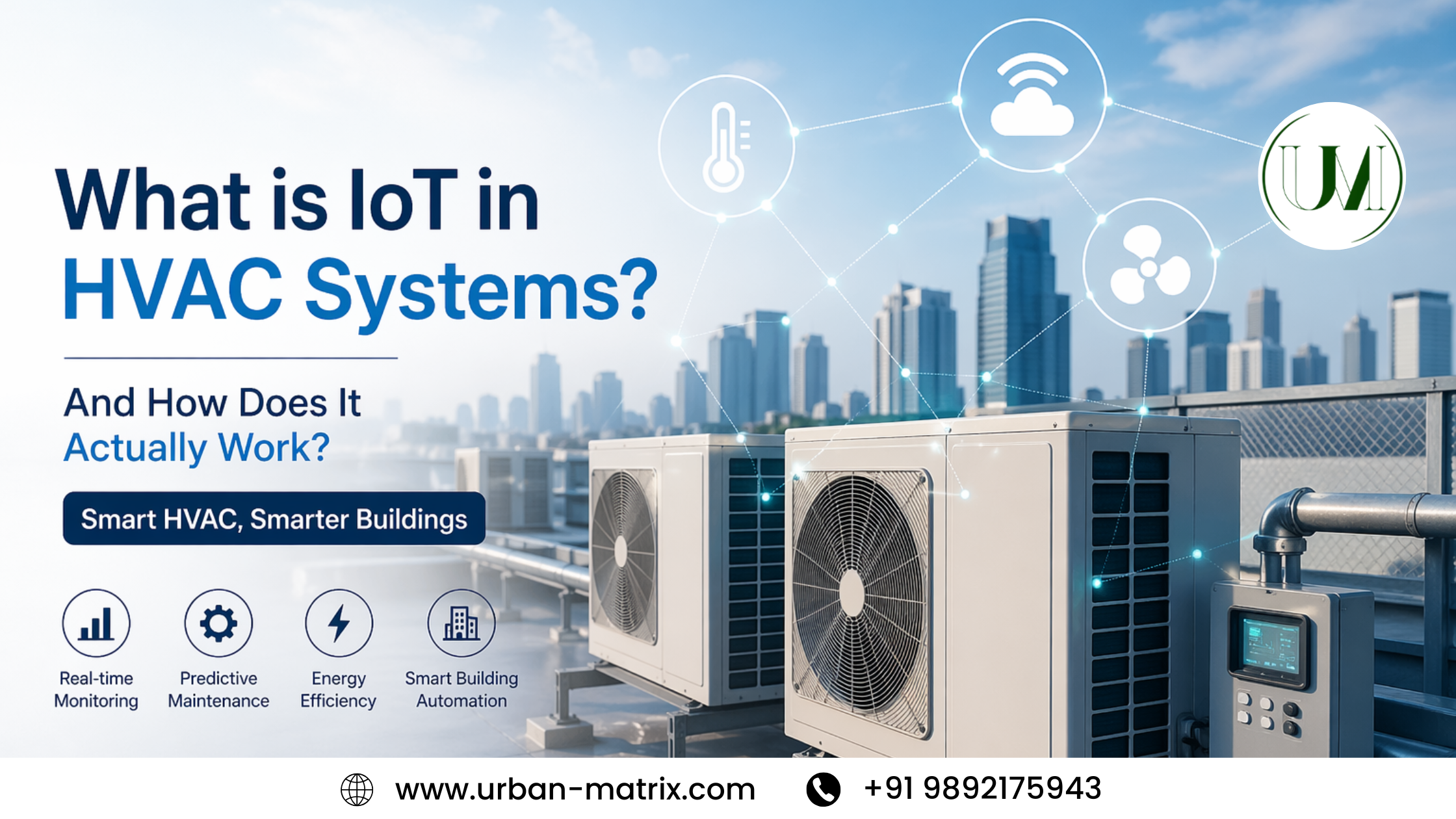
What is IoT in HVAC Systems? And How Does It Actually Work?
What is IoT in HVAC Systems? And How Does It Actually Work? Managing HVAC systems in commercial buildings isn’t as simple as it used to be. Rising energy costs, unexpected breakdowns, and inefficient maintenance are common challenges, especially in a fast-paced city like Mumbai. Many building owners still rely on reactive maintenance. Something breaks, then it gets fixed. But this approach often leads to higher costs, downtime, and discomfort for occupants. This is where HVAC, MEP & IoT SOLUTIONS are changing the game. Instead of guessing what’s happening inside your systems, you can now monitor everything in real time. Imagine knowing about a potential failure before it happens. Imagine reducing energy bills without compromising comfort. That’s exactly what IoT in HVAC systems makes possible. And if you’re working with experienced HVAC MEP contractors in Mumbai, this transformation becomes even more powerful. IoT in HVAC systems refers to the use of connected sensors and smart devices that monitor, analyze, and control heating, ventilation, and air conditioning systems in real time. It enables predictive maintenance, energy optimization, and centralized control through a building management system, improving efficiency and reducing operational costs. What is IoT in HVAC Systems? IoT (Internet of Things) in HVAC systems means connecting your equipment, like chillers, AHUs, thermostats, and sensors to a digital network. These devices continuously collect data such as temperature, humidity, airflow, and energy usage. This data is then analyzed using software platforms, allowing facility managers to make smarter decisions. In simple terms:IoT turns traditional HVAC into a smart HVAC system that can think, analyze, and respond automatically. It is a core part of modern building automation systems using IoT, especially in commercial buildings. Why is IoT Important in HVAC & MEP Systems? Let’s be honest traditional HVAC systems have limitations. Key Challenges Without IoT: Why IoT is Needed: In cities like Mumbai, where energy costs and system loads are high, IoT-based MEP maintenance solutions are no longer optional they’re essential. How IoT Works in HVAC Systems (Step-by-Step) Let’s break this down in a simple way. Step 1: Sensor Installation Sensors are installed across HVAC components.They track: Step 2: Data Collection These sensors continuously send data to a central system.This happens in real time. Step 3: Data Analysis Software platforms analyze this data using algorithms.They detect: Step 4: Automation Based on insights, the system can: Step 5: Alerts & Notifications Facility managers receive alerts before issues become serious.This enables quick action. Step 6: Continuous Optimization The system keeps learning and improving efficiency over time. Benefits of IoT in HVAC & MEP Solutions Here’s where things get interesting. Key Advantages: IoT HVAC vs Traditional HVAC Systems Feature Traditional HVAC IoT-Based HVAC Monitoring Manual Real-time Maintenance Reactive Predictive Energy Efficiency Low High Control Limited Centralized (BMS) Downtime High Minimal Data Usage None Data-driven decisions IoT HVAC systems are smarter, faster, and more cost-efficient than traditional systems. Who Needs IoT in HVAC & MEP Systems? IoT is not just for large corporations it’s for anyone managing complex systems. Ideal for: If you’re already investing in commercial HVAC maintenance Mumbai, adding IoT gives you a massive advantage. Cost / Pricing Factors of IoT in HVAC Systems The cost depends on multiple factors. Key Pricing Factors: While initial investment may seem high, long-term savings in energy and maintenance make it highly cost-effective. Industry Trends in 2026 The HVAC industry is evolving fast. What’s Trending: Experts estimate that smart HVAC adoption will grow significantly as businesses focus on sustainability and cost control. Why Choose Urban matrix in Mumbai? When it comes to implementing HVAC, MEP & IoT SOLUTIONS, execution matters more than technology. At Urban matrix, we focus on: What Makes Us Different: We don’t just install systems, we optimize them for real-world performance. FAQs (People Also Ask) 1. What is IoT in HVAC systems in simple terms? IoT in HVAC means connecting systems to smart sensors and software for real-time monitoring and automated control. 2. How does IoT improve HVAC efficiency? It uses real-time data to optimize performance, reduce energy usage, and prevent breakdowns. 3. Is IoT in HVAC expensive? Initial costs are higher, but long-term savings in energy and maintenance make it cost-effective. 4. Can IoT reduce HVAC energy costs? Yes, IoT can reduce energy consumption by up to 20–30% through smart automation. 5. Who provides IoT HVAC solutions in Mumbai? Experienced HVAC MEP contractors in Mumbai like Urban matrix offer complete IoT-integrated solutions. If you’re still relying on traditional HVAC maintenance, you’re already behind. Smart buildings are no longer the future they’re the present. Upgrade to HVAC, MEP & IoT SOLUTIONS with Urban matrixReduce costs, improve efficiency, and prevent breakdownsGet expert consultation for your building in Mumbai Contact Urban matrix today and make your HVAC system smarter, not harder.
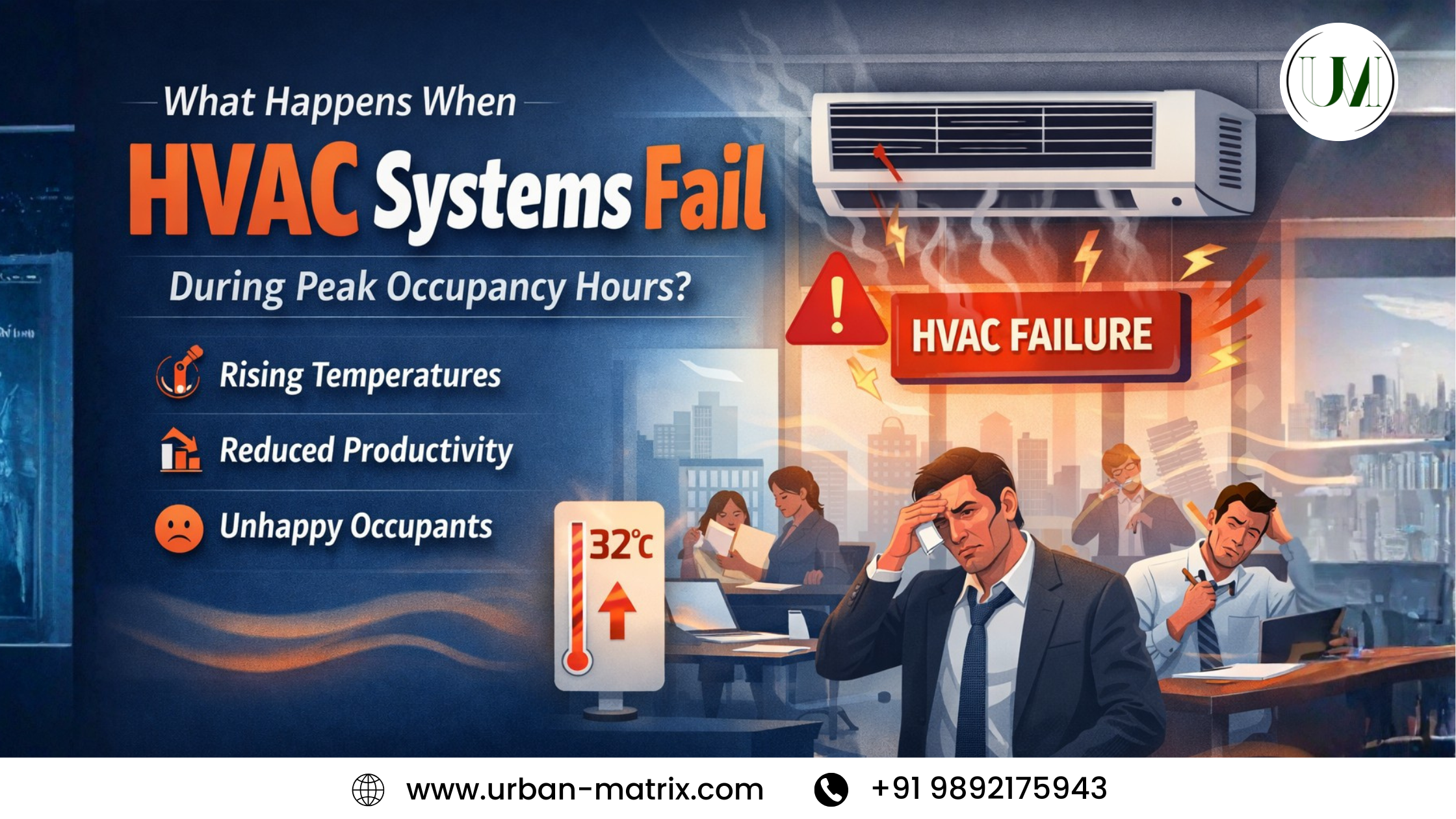
What Happens When HVAC Systems Fail During Peak Occupancy Hours?
Imagine a busy commercial building in Mumbai during peak working hours. Employees are in meetings, customers are visiting offices, and operations are running at full capacity. Suddenly, the HVAC system stops working. Within minutes, the indoor environment becomes uncomfortable. Temperatures rise, humidity increases, and productivity drops. For facilities like malls, hospitals, offices, hotels, or data centers, an HVAC failure during peak occupancy hours can create serious operational disruption. Mumbai’s climate makes the situation even more challenging. High humidity levels and dense commercial infrastructure mean HVAC systems work continuously to maintain indoor comfort and air quality. When these systems fail, the consequences are not limited to discomfort – they can affect equipment, employee productivity, and even customer experience. This is where HVAC MEP SOLUTIONS in Mumbai become essential. With proper planning, preventive maintenance, and monitoring, businesses can reduce the risk of sudden HVAC breakdowns. Companies offering HVAC MEP contractors in Mumbai and MEP maintenance services in Mumbai help commercial facilities maintain system reliability. In this article, we will explore what happens when HVAC systems fail during peak occupancy hours and how professional maintenance strategies can prevent costly disruptions. When HVAC systems fail during peak occupancy hours, indoor temperatures rise quickly, ventilation decreases, and occupants experience discomfort. Businesses may face operational disruption, productivity loss, and equipment risks. Preventive maintenance through HVAC MEP SOLUTIONS and commercial HVAC maintenance Mumbai services helps reduce breakdown risks and ensures consistent building performance. What Happens When HVAC Systems Fail During Peak Occupancy Hours? HVAC failure during peak occupancy means the heating, ventilation, and air conditioning system stops functioning while the building is operating at maximum capacity. This situation can lead to immediate environmental imbalance within the building. Common impacts include: In cities like Mumbai, where commercial buildings rely heavily on climate control, HVAC downtime can quickly affect operations. Professional HVAC MEP SOLUTIONS focus on system monitoring, preventive inspections, and performance optimization to ensure systems continue operating efficiently during peak hours. Mini Summary What Causes HVAC Failures During Peak Occupancy? Several factors contribute to HVAC system failures, especially in commercial buildings operating continuously. Common causes include: • Lack of preventive maintenance• Clogged air filters restricting airflow• Refrigerant leakage in cooling systems• Electrical faults in control panels• Overloaded HVAC equipment during peak demand• Poor ventilation design• Aging mechanical components In many commercial facilities, HVAC systems run for long hours without proper inspection. Over time, small issues grow into system failures. Regular inspections through MEP maintenance services in Mumbai help detect these problems early and avoid sudden breakdowns. Mini Summary Most HVAC failures occur due to poor maintenance, aging components, and excessive load. Preventive service helps detect issues before they cause system shutdowns. How Preventive HVAC MEP Solutions Work Preventive HVAC maintenance follows a structured process to ensure the system operates efficiently during high-demand periods. Typical process followed by professional HVAC MEP contractors in Mumbai: 1. System Inspection Technicians examine: 2. Performance Monitoring Sensors and monitoring systems track: 3. Cleaning and Servicing Routine maintenance includes: 4. Predictive Maintenance Advanced monitoring helps identify early warning signs before major failure occurs. 5. Scheduled Servicing Commercial HVAC systems require periodic servicing to maintain optimal performance. Mini Summary Preventive maintenance combines inspection, monitoring, and scheduled servicing to ensure HVAC systems operate efficiently during peak hours. Benefits of Preventive HVAC MEP Solutions Businesses that invest in HVAC MEP SOLUTIONS gain several operational advantages. Key benefits include: • Reduced risk of system breakdown• Consistent indoor temperature control• Improved energy efficiency• Lower long-term repair costs• Increased equipment lifespan• Better indoor air quality• Improved workplace productivity According to industry studies, preventive HVAC maintenance can reduce emergency repair costs by up to 30 – 40% in commercial facilities. This is why many organizations in Mumbai rely on commercial HVAC maintenance Mumbai services to maintain operational reliability. Mini Summary Preventive HVAC maintenance improves efficiency, reduces repair costs, and ensures a comfortable indoor environment for building occupants. HVAC Emergency Repairs vs Preventive Maintenance Factor Emergency HVAC Repair Preventive HVAC Maintenance Cost Usually higher due to urgent service Lower long-term operational cost Downtime Often causes business disruption Minimal downtime System lifespan Components wear out faster Longer equipment life Energy efficiency Lower efficiency Optimized performance Risk level High risk of sudden failure Reduced risk through monitoring Preventive maintenance through HVAC MEP SOLUTIONS helps avoid costly emergency repairs and operational disruptions. Who Needs Professional HVAC MEP Solutions? Many commercial facilities depend heavily on reliable HVAC systems. Organizations that benefit the most include: • Corporate office buildings• Hospitals and healthcare facilities• Hotels and hospitality spaces• Shopping malls• Data centers• Educational institutions• Industrial facilities Any building with large occupancy levels must ensure HVAC systems operate efficiently. This is why many facility managers partner with HVAC MEP contractors in Mumbai for reliable system maintenance. Mini Summary Large commercial buildings with high occupancy rely on professional HVAC maintenance to ensure comfort, safety, and operational efficiency. HVAC Maintenance Cost Factors in Mumbai The cost of HVAC maintenance depends on several factors. Important pricing considerations include: • Size of the building• HVAC system capacity• Number of air handling units• Complexity of duct systems• Frequency of maintenance visits• Age of HVAC equipment Commercial facilities in Mumbai often choose annual maintenance contracts to ensure consistent system performance and predictable costs. Professional MEP maintenance services in Mumbai typically offer customized service plans depending on building requirements. HVAC Industry Trends in 2026 The HVAC industry is rapidly evolving with technology-driven solutions. Key trends shaping commercial HVAC systems include: • Smart building automation systems• AI-based predictive maintenance• Energy-efficient HVAC equipment• IoT monitoring systems for real-time performance tracking• Sustainable cooling technologies Many companies now integrate HVAC MEP SOLUTIONS with building management systems to monitor system health and energy consumption. These innovations help facility managers maintain consistent indoor environments even during peak occupancy. Why Choose Urban Matrix in Mumbai? Urban Matrix is a trusted provider of commercial HVAC MEP SOLUTIONS in Mumbai. Our approach focuses on proactive system management rather than reactive repairs. What makes Urban Matrix different: • Experienced HVAC MEP contractors in Mumbai• Preventive
Why HVAC Failures Are Most Common at the Start of Summer.
Every year as summer approaches the same issue quietly repeats itself across commercial buildings hospitals malls IT parks and large residential complexes. HVAC systems that seemed to operate smoothly during winter suddenly begin to fail. What makes this situation more frustrating is that these failures rarely occur during the peak summer months of May or June. In most cases they happen much earlier during the first few weeks of summer when cooling demand begins to rise. This early phase of the season is when HVAC systems are tested the hardest. Small weaknesses that remained hidden during cooler months suddenly surface under increased load. This guide explains why HVAC failures are most common at the start of summer what most buildings overlook and how HVAC MEP IoT Solution based systems are helping facilities across India reduce breakdowns downtime and energy losses. What Is an HVAC MEP IoT Solution An HVAC MEP IoT Solution is an integrated approach that connects heating ventilation and air conditioning systems with mechanical electrical and plumbing infrastructure using smart technology. These systems rely on sensors automation and real time monitoring rather than manual checks or reactive maintenance. Key elements typically include smart sensors predictive alerts automated controls and centralized dashboards. Together these tools allow facility teams to identify stress inefficiencies and early warning signs before they escalate into system failures. In simple terms traditional HVAC systems respond after a breakdown occurs.IoT enabled HVAC systems work proactively to prevent failures before they disrupt operations. Why HVAC Reliability Matters Most at the Start of Summer The beginning of summer is the most demanding transition period for HVAC systems. During this time cooling requirements increase rapidly systems shift from low load to continuous operation and previously dormant issues begin to surface. At the same time occupants expect immediate comfort as temperatures rise. For commercial buildings this goes far beyond comfort. HVAC failures directly affect business continuity patient safety in healthcare facilities tenant satisfaction operational costs and overall brand perception. A single HVAC failure at the wrong time can result in hours of downtime uncomfortable indoor conditions and significant financial losses. How HVAC Systems Behave During Seasonal Change To understand why failures peak early in summer it is important to understand how HVAC systems behave across different seasons. Operation During Winter and Mild Weather During cooler months HVAC systems typically run at partial load. Compressors cycle less frequently chillers operate below their rated capacity and overall system stress remains low. Minor defects exist but often go unnoticed. Operation During Early Summer As temperatures rise cooling demand increases sharply. Compressors begin running for longer durations electrical loads increase and control systems operate closer to their limits. This sudden change exposes weak components that survived winter but are unable to handle sustained summer operation. Key Reasons HVAC Failures Peak at the Start of Summer Hidden Wear From Previous Seasons Many HVAC components degrade gradually over time. Bearings belts electrical contacts sensors and valves often show no visible signs of failure during winter. Once summer begins these components are pushed beyond their comfort zone. Without a smart HVAC management system this wear remains undetected until a breakdown occurs. Reactive Maintenance Practices One of the most common reasons HVAC systems fail early in summer is the way maintenance is handled. Many buildings still depend on breakdown driven maintenance manual inspections or fixed calendar based servicing. The assumption is simple. If the system is running it does not need attention. This approach fails during summer because HVAC breakdowns tend to be sudden disruptive and highly visible especially in commercial environments. Electrical Load Stress on MEP Systems HVAC systems are closely tied to electrical infrastructure. When summer begins overall electrical demand increases panel loads rise voltage fluctuations become more frequent and backup systems are tested. Without proper MEP automation solutions for commercial buildings coordination between HVAC and electrical systems becomes weak leading to tripped breakers damaged components and control failures. Airflow and Heat Rejection Problems Early summer often exposes airflow and heat rejection issues such as dirty coils restricted air paths inefficient cooling towers and poor condenser performance. These conditions reduce efficiency and significantly increase compressor stress. An IoT based building management system can detect these problems early by tracking performance data and temperature variations. Lack of Real Time Monitoring Most HVAC failures are not truly sudden. They are the result of ignored warning signs. Without continuous monitoring temperature drift energy spikes and abnormal operating patterns go unnoticed. By the time alarms activate the damage has already occurred. How HVAC MEP IoT Solutions Prevent Early Summer Failures Smart systems fundamentally change how HVAC performance is managed. Continuous Performance Monitoring IoT sensors track temperature pressure energy consumption and equipment runtime in real time. This data highlights stress patterns long before a failure takes place. Predictive Alerts Instead of relying on manual inspections smart HVAC systems generate alerts for abnormal loads overheating components and efficiency losses. Maintenance teams can intervene early and avoid breakdowns. Automated Load Management MEP automation solutions balance cooling demand electrical load and equipment sequencing. This prevents overloads during sudden temperature spikes and improves system stability. Data Driven Maintenance Planning Maintenance schedules are no longer fixed or reactive. They are planned based on actual equipment health usage trends and seasonal demand forecasts resulting in fewer failures and longer equipment life. Common HVAC Mistakes Buildings Make Before Summer Many buildings repeat the same mistakes year after year. Waiting until peak summer to act leaves little room for preventive measures. Treating HVAC and MEP systems as separate entities causes root issues to be missed. Ignoring energy consumption trends eliminates an important early warning signal. Relying solely on manual inspections fails to capture real time system behavior under load. Why Smart HVAC Management Is Becoming the Industry Standard Modern commercial buildings are evaluated not only by architecture or amenities but by comfort consistency energy efficiency and operational reliability. Smart HVAC systems help facilities reduce breakdowns control operating costs extend equipment lifespan and deliver a better experience for occupants.