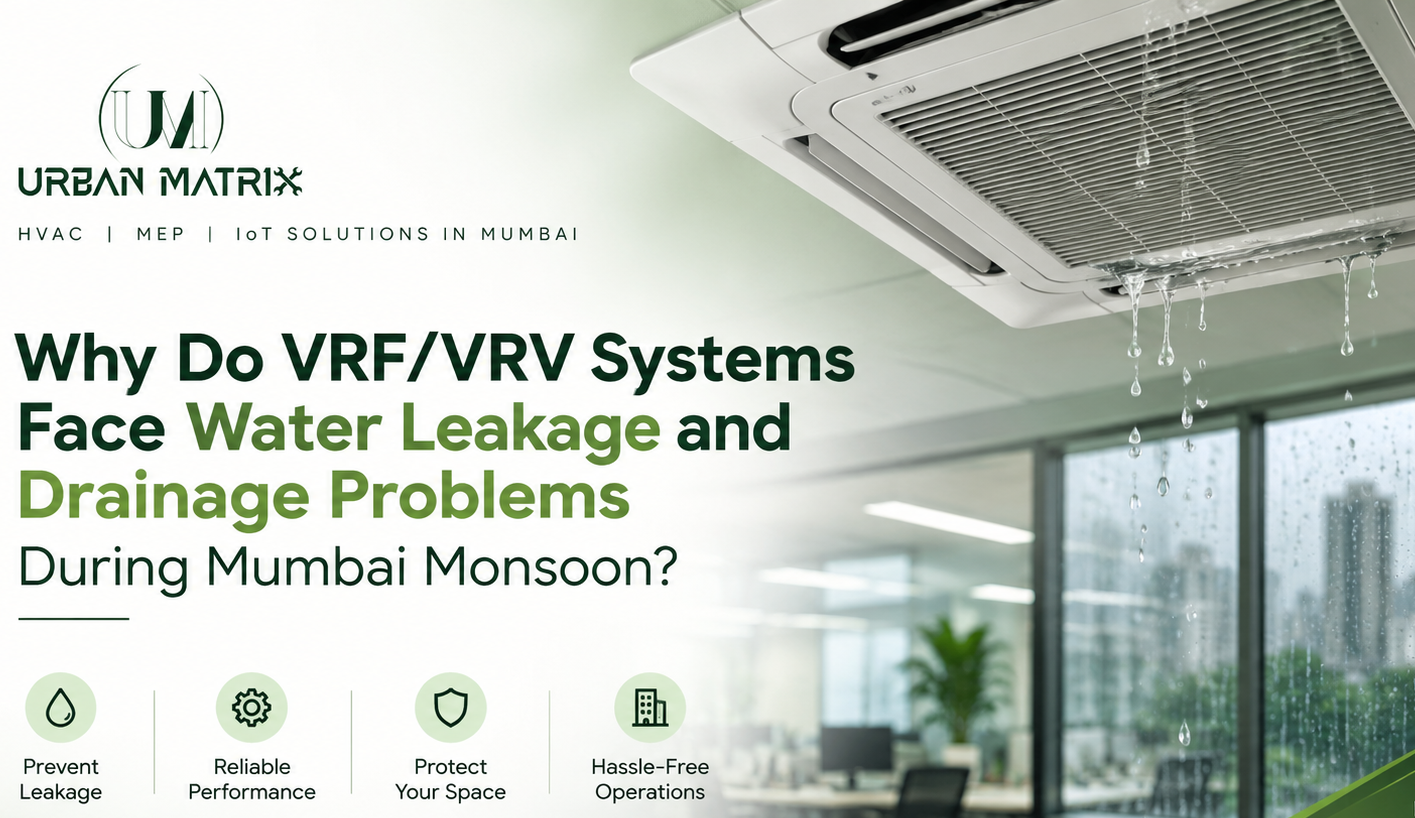
Mumbai’s monsoon can expose HVAC problems that remain unnoticed during the rest of the year. One of the most common complaints in commercial offices is simple: “The AC is cooling, so why is water suddenly dripping from the ceiling?” In many cases, the issue is not the cooling itself. It is the condensate drainage system. High humidity means an air-conditioning system has more moisture to remove from indoor air. If a drain pipe is partially blocked, the drain pump is weak, insulation is damaged, or the drainage slope is incorrect, that extra condensate can expose the problem quickly. This is why timely VRF AC repair in Mumbai becomes especially important during monsoon. Ignoring a small drainage issue may eventually lead to ceiling stains, damaged interiors, mould, electrical risks and disruption inside the workplace. For businesses using VRF or VRV systems, regular inspection is often much easier than dealing with water dripping over workstations, reception areas or expensive equipment later. Why Do VRF/VRV Systems Develop Drainage Problems During Monsoon? VRF and VRV systems can face drainage problems during monsoon because high humidity increases condensate formation. Blocked drain lines, incorrect drainage slopes, faulty drain pumps, dirty drain pans and damaged insulation can prevent water from draining correctly, resulting in AC water leakage, ceiling stains, unpleasant odours and indoor moisture problems. What Are VRF/VRV Drainage Problems? VRF, or Variable Refrigerant Flow, systems use multiple indoor units connected to an outdoor system. VRV is a commonly used term for the same general type of variable-refrigerant technology. During cooling, indoor units do more than lower room temperature. As humid air passes over the cold cooling coil, moisture from the air condenses into water. That water is collected in a drain pan and should move safely through a condensate drain pipe. If the drainage system cannot handle or remove this water properly, AC water leakage may occur. Manufacturer installation guidance stresses that condensate drain piping should have a proper downward slope and that drainage should be tested to confirm water flows smoothly. Guidance also warns that inadequate insulation in very humid environments can contribute to condensation problems. That is why a drainage inspection should be part of VRF AC maintenance, especially before and during Mumbai’s monsoon season. What Causes VRF/VRV Drainage Problems During Mumbai Monsoon? Several problems can contribute to water leakage. Sometimes there is one obvious fault. In other cases, two or three small issues are happening together. The U.S. EPA recommends keeping indoor relative humidity below 60%, and ideally between 30% and 50% where practical, because excessive moisture increases the risk of condensation and mould. It also specifically recommends keeping HVAC drip pans clean and drain lines unobstructed. Monsoon water leakage is not always a major VRF failure. It may begin with a blocked drain, weak pump, damaged insulation or incorrect drainage slope. A professional inspection helps identify the actual cause before unnecessary replacement work is considered. How Does VRF AC Repair in Mumbai Work for Drainage Problems? A proper inspection should go beyond simply cleaning the visible drain outlet. Step 1: Identify the Source of Water First, the technician checks whether the water is actually coming from the indoor VRF unit, condensate piping, insulation, surrounding plumbing or another building service. This matters because every ceiling leak near an AC unit is not automatically an AC fault. Step 2: Inspect the Drain Pan The drain pan is checked for standing water, dirt, cracks, microbial buildup and overflowing. If water is collecting faster than it can drain, the technician needs to identify why. Step 3: Check the Condensate Drain Line The drain line is inspected for: Professional VRF AC service in Mumbai should also verify whether water is flowing smoothly after cleaning. Step 4: Check the Drain Pump If the indoor unit uses a condensate pump, technicians check whether the pump is receiving power, operating correctly and removing water at the required rate. A malfunctioning float switch or drain pump can sometimes trigger error codes or cause the indoor unit to stop. Step 5: Inspect the Cooling Coil and Airflow Poor airflow can affect coil conditions and overall system performance. Technicians may therefore inspect filters, cooling coils, blower operation and airflow rather than treating the drain line as an isolated component. Step 6: Inspect Insulation Wet, damaged or poorly sealed insulation can create visible dripping that may look like a blocked drain. This is particularly important in Mumbai’s humid conditions. Step 7: Test the System After corrective work, the system should be operated and the drainage path checked again. The goal of VRV AC repair in Mumbai is not simply to stop today’s leak. It is to understand why it happened and reduce the chance of it returning. What Are the Benefits of Preventive VRF AC Maintenance? Regular VRV VRF maintenance can help commercial facilities by: For a busy commercial property, prevention can also mean fewer complaints from employees, tenants and customers. Reactive Repair vs Preventive AMC vs IoT Monitoring Approach What Happens Best Use Reactive AC repair Technician visits after leakage or failure occurs Sudden breakdowns and emergency problems Preventive VRF maintenance Drainage, coils, pumps, controls and system condition are checked periodically Offices and commercial facilities wanting fewer breakdowns HVAC AMC Scheduled maintenance across HVAC equipment throughout the year Larger commercial properties IoT-based monitoring Operating parameters, alarms and selected equipment conditions can be monitored digitally Facilities requiring greater visibility and proactive maintenance A combination of physical inspection and intelligent monitoring can be useful for businesses searching for HVAC MEP & IoT Solutions in Mumbai rather than treating each breakdown separately. Who Needs VRF AC Repair and Preventive Maintenance? Professional maintenance is particularly useful for buildings with several indoor VRF/VRV units or areas where even a small water leak could interrupt daily operations. This may include: Properties already noticing ceiling stains, dripping water, musty smells, repeated drain blockages or AC error codes should consider an inspection instead of waiting for the problem to become more serious. Businesses searching for commercial AC repair in Mumbai
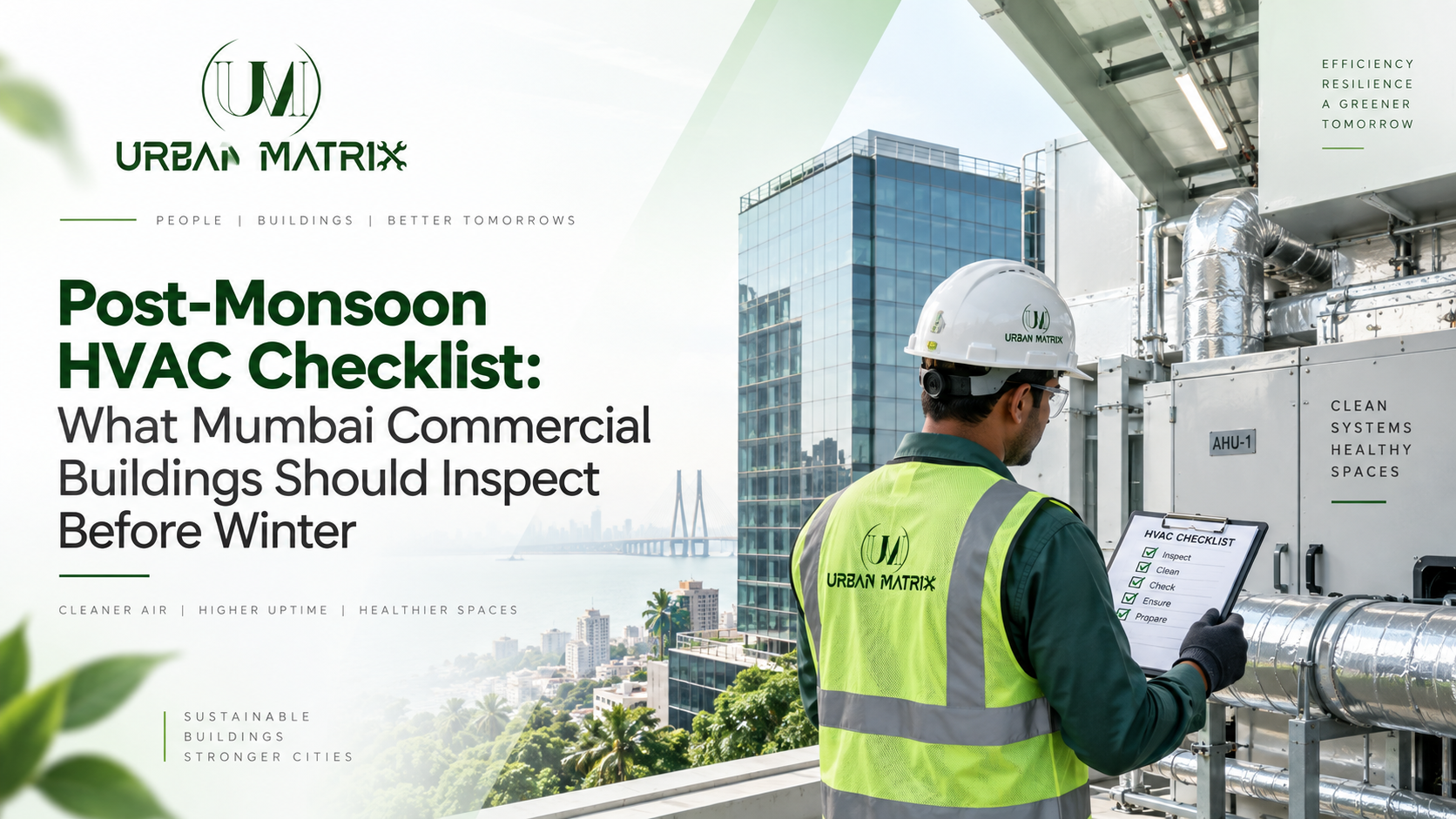
Post-Monsoon HVAC Checklist: What Mumbai Commercial Buildings Should Inspect Before Winter
Cleaning HVAC filters is an important maintenance step, but it does not always solve cooling or efficiency problems. If your system is still underperforming, there may be other issues such as dirty coils, restricted airflow, refrigerant problems, duct leakage, or faulty controls. Understanding why filter cleaning alone does not improve HVAC performance can help facility managers identify the real cause of poor cooling instead of repeatedly treating only one part of the system. For commercial buildings in Mumbai, a complete HVAC inspection can help improve airflow, energy Here’s a simple checklist to start with. 1. Check the HVAC Filters Filters are usually the first thing teams inspect, and for good reason. During the monsoon, dust and moisture can build up faster than expected, which may restrict airflow and reduce cooling efficiency. Check whether filters need cleaning, replacement or more frequent attention. A reliable HVAC contractor in Mumbai can also help ensure filter maintenance is part of a complete system check rather than the only step taken. 2. Inspect AHUs and Airflow After the monsoon, AHUs should get more than a quick visual check. Look at cooling coils, blowers, belts, bearings, drain trays and condensate lines. Also check whether airflow feels consistent across different areas of the building. If one zone is too warm while another is too cold, the issue may not be the thermostat. It could be related to airflow, balancing or AHU performance. Regular commercial HVAC services in Mumbai can help catch these issues before they start affecting comfort and energy consumption. 3. Don’t Ignore the Cooling Tower Cooling towers often work quietly in the background, which is why small problems can go unnoticed. Regular cooling tower maintenance services in Mumbai can help identify issues like scaling, clogged nozzles, uneven water distribution, reduced airflow, and declining cooling efficiency before they affect the overall HVAC system. After the monsoon, check for: If the cooling tower is not working efficiently, the rest of the HVAC system may have to work harder. That can eventually show up as higher energy bills or reduced cooling performance. Including cooling tower checks as part of HVAC AMC services in Mumbai can help avoid these issues. 4. Check Electrical and MEP Systems Too Post-monsoon maintenance should not stop at HVAC. Moisture can also affect electrical panels, pumps, motors, wiring, plumbing lines, contactors and control systems. This is where integrated HVAC and MEP solutions in Mumbai make a difference. A proper post-monsoon check should cover: Experienced MEP consultant in Mumbai can help facility teams identify connected issues instead of looking at each system separately. For offices and commercial buildings, regular MEP maintenance services in Mumbai can also reduce the risk of sudden breakdowns. 5. Look for Moisture, Leakage and Drainage Problems Mumbai’s humidity can create problems that are easy to miss. Check equipment areas for blocked drains, water leakage, damp insulation, condensation or signs of corrosion. A small moisture issue may not look serious today, but over time it can affect equipment life, indoor comfort and maintenance costs. That’s why preventive maintenance services in Mumbai are especially important after the rainy season. 6. Compare Your Energy Consumption One of the easiest ways to spot an efficiency problem is to look at your energy usage. If occupancy and working hours are almost the same but electricity consumption has gone up, your HVAC system may be working harder than it should. Possible reasons include: Using IoT solutions in Mumbai can help facility teams understand what is happening between routine service visits. With IoT-based HVAC monitoring solutions in Mumbai, unusual energy consumption or equipment behaviour can be spotted earlier. 7. Use IoT Monitoring to Stay Ahead of Problems Most maintenance problems do not appear overnight. There are usually small warning signs first. IoT monitoring can help facility teams track things like temperature, equipment runtime, energy consumption, operating status and system alerts. With MEP system monitoring in Mumbai, teams can identify unusual patterns earlier instead of waiting for a complaint or breakdown. For commercial properties, IoT solutions for commercial buildings in Mumbai can make maintenance more proactive and easier to manage. 8. Review Your AMC An AMC should not only mean calling someone after something stops working. A good maintenance plan should include regular inspections, preventive servicing, equipment health checks and performance monitoring. Businesses using commercial HVAC AMC services in Mumbai or MEP AMC services in Mumbai can reduce the chances of unexpected downtime. Working with a reliable HVAC consultant in Mumbai that can handle installation, maintenance, AMC and monitoring under one approach can also make facility management simpler. Why an Integrated HVAC, MEP & IoT Approach Helps In a commercial building, systems are connected. An HVAC problem may be linked to a pump, electrical component, cooling tower, sensor or water system. That’s why looking at the complete building system often gives better results than fixing one component at a time. With HVAC MEP & IoT Solutions in Mumbai, India facility teams can bring together HVAC maintenance, MEP maintenance, AMC, energy monitoring and IoT-based alerts under one strategy. The goal is simple: identify problems earlier and keep the building running efficiently. Before You Finish the Post-Monsoon Check Ask your facility team a few simple questions: Is the airflow consistent across all areas? Has cooling performance dropped recently? Are AHUs and cooling towers being checked properly? Has energy consumption increased without a clear reason? Is maintenance mostly preventive, or do you usually act after a breakdown? Most importantly, do you know how your HVAC and MEP systems are performing between service visits? At Urban Matrix, we provide HVAC solutions in Mumbai, MEP solutions in Mumbai, HVAC installation services in Mumbai, commercial HVAC services in Mumbai, AMC solutions in Mumbai and IoT solutions in Mumbai for commercial buildings. The idea is not just to fix problems when they happen. It is to spot them earlier, maintain systems better and keep building operations more reliable. Why Filter Cleaning Alone May Not Improve HVAC Performance You cleaned the HVAC filters, but the cooling
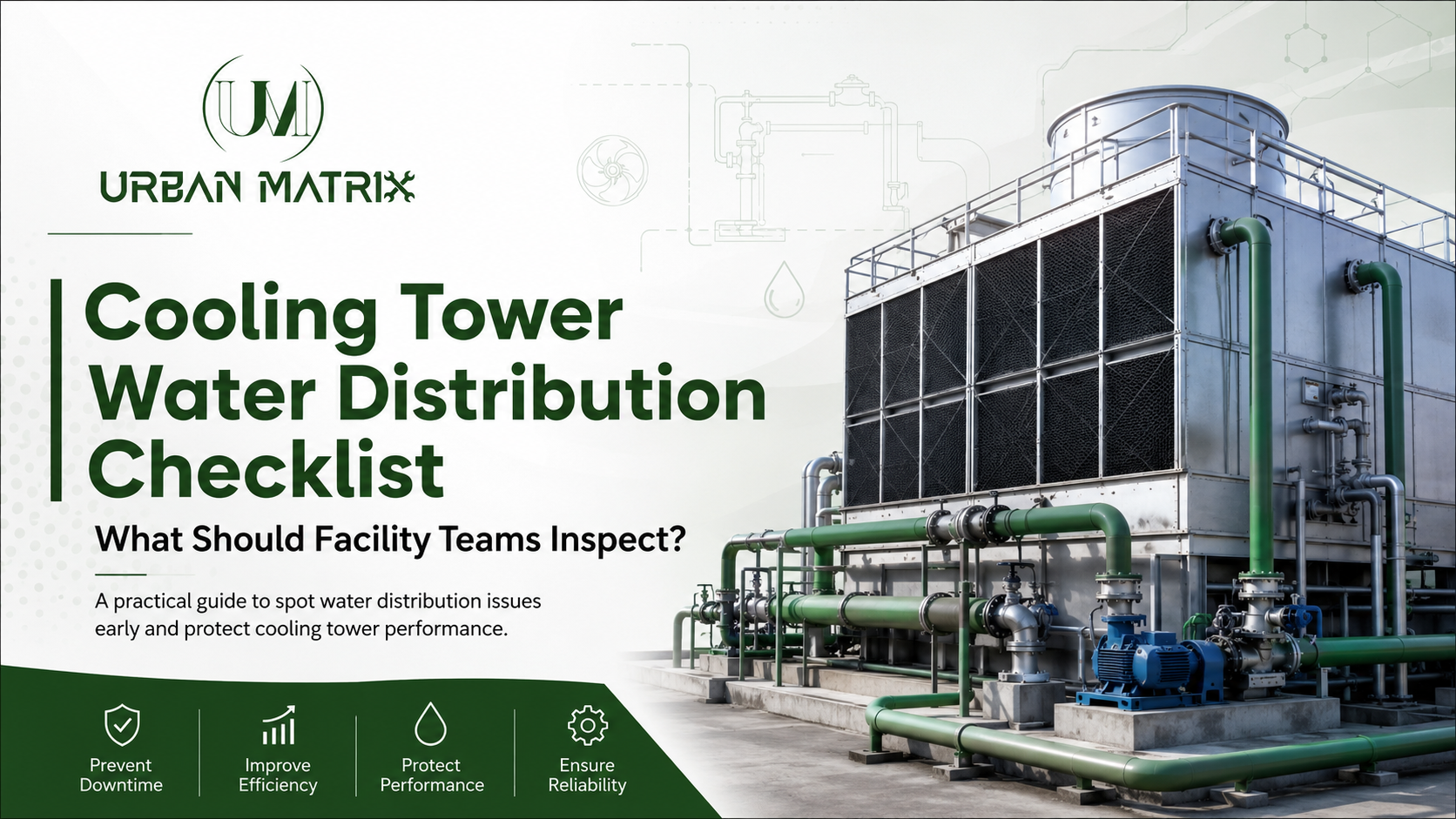
How Can Poor Water Distribution Reduce Cooling Tower Performance?
A cooling tower can appear to be operating normally even when its performance has already started to drop.The fan may be running. Water may still be circulating. The chiller may continue to provide cooling. Yet inside the tower, water may not be reaching the fill media evenly.For commercial facilities, regular cooling tower maintenance in Mumbai should therefore focus not only on cleaning and servicing equipment but also on checking how effectively water is distributed throughout the tower. This is where a small distribution problem can begin affecting the entire HVAC system. Poor water distribution can create dry spots, reduce heat transfer, encourage scale buildup and increase the workload on connected equipment. Over time, this can lead to higher energy consumption, declining cooling performance and more frequent maintenance. This guide explains why water distribution matters, what causes uneven flow and what facility teams should inspect to maintain efficient cooling tower performance. What Is Water Distribution in a Cooling Tower? A cooling tower helps remove heat from warm condenser water before that water returns to the chiller. Warm water enters the tower and is distributed over the fill media. The fill increases the surface area available for contact between water and air, supporting the heat rejection process. For the cooling tower to work efficiently, water should reach the fill as evenly as possible. If one area receives too much water while another remains relatively dry, part of the available heat-transfer surface is not being used properly. This is known as uneven or poor water distribution. The cooling tower may continue running, but its ability to reject heat can gradually decline. Why Does Even Water Distribution Matter? Think of the cooling tower fill as a large surface designed to spread water across as much area as possible. When water reaches the full surface, the tower can use its available heat-transfer capacity effectively. When sections stay dry, that usable area becomes smaller. Poor water distribution may contribute to: This is why facility teams should not look at cooling towers and chillers as completely separate pieces of equipment. Their performance is closely connected. What Causes Poor Water Distribution in Cooling Towers? Several mechanical and water-related issues can affect distribution. 1. Clogged Spray Nozzles Spray nozzles help distribute water over different sections of the cooling tower. Over time, they may become partially blocked by: When a nozzle becomes restricted, the amount of water reaching that section of the fill decreases. If several nozzles are affected, larger dry areas may develop. Inspecting and cleaning nozzles should therefore be an important part of preventive cooling tower maintenance in Mumbai. 2. Damaged or Misaligned Nozzles A nozzle does not need to be fully blocked to affect performance. If it becomes damaged, loose or incorrectly positioned, its spray pattern may change. One section may receive excessive water while another receives very little. This reduces the effective use of the fill media and can affect overall cooling performance. 3. Insufficient Circulating Water Flow Poor distribution may also occur when the system is not circulating enough water. Possible causes include: An experienced HVAC company in Mumbai should therefore evaluate the entire condenser-water circuit rather than examining only the cooling tower itself. 4. Scale Inside Distribution Pipes Mineral deposits can gradually build up inside pipes. As the internal opening becomes smaller, both water flow and pressure can change. This may cause some areas of the tower to receive sufficient water while others receive less. Over time, the imbalance can affect cooling tower performance. 5. Incorrect Water Pressure Cooling tower nozzles are designed to operate within specific flow and pressure conditions. If pressure is too low, water may not reach the intended coverage area. Simply seeing water coming from the nozzle does not mean the distribution pattern is correct. The amount, direction and coverage of water all matter. How Does Poor Water Distribution Affect Heat Transfer? The main job of the cooling tower is to reject heat from the condenser-water system. To do this effectively, water and air need enough contact across the fill surface. When certain areas remain dry, less surface is available for effective heat transfer. As a result, the cooling tower may send warmer condenser water back to the chiller. The chiller then has to work harder to achieve the required cooling. Facility teams may begin to notice: For this reason, chiller maintenance services Mumbai should sometimes include a wider assessment of the cooling tower and condenser-water system. The chiller may be working correctly, while the actual performance issue begins elsewhere. Cooling Tower Water Distribution Checklist: What Should Facility Teams Inspect? A practical inspection checklist can help identify problems before they affect the complete HVAC system. 1. Check Spray Nozzles Inspect the nozzles for: Water should be reaching the intended fill areas consistently. Weak or irregular spray should be investigated. 2. Look for Dry Spots on the Fill Visible dry areas can be one of the clearest signs of uneven distribution. Where accessible and safe to inspect, facility teams should check whether the fill appears to be receiving water consistently across its surface. Repeated dry sections may point to problems with nozzles, water flow or distribution piping. 3. Inspect the Fill Media The fill should be checked for: Dirty or clogged fill can reduce both water flow and airflow, further affecting heat rejection. 4. Check Circulating Water Flow Confirm that sufficient water is moving through the condenser-water system. Inspect: Low circulation can reduce the amount of water reaching different sections of the cooling tower. 5. Inspect Pumps and Strainers Even clean nozzles may perform poorly if the pump is not delivering sufficient flow. Strainers should also be checked for blockage. Restrictions upstream can affect water distribution throughout the tower. 6. Inspect Distribution Pipes Look for: Restrictions inside distribution piping can reduce water flow to certain areas. 7. Monitor Condenser-Water Temperature Temperature trends can provide useful clues about cooling tower performance. If condenser water leaving the tower is consistently warmer than expected under similar conditions, the heat rejection system may need
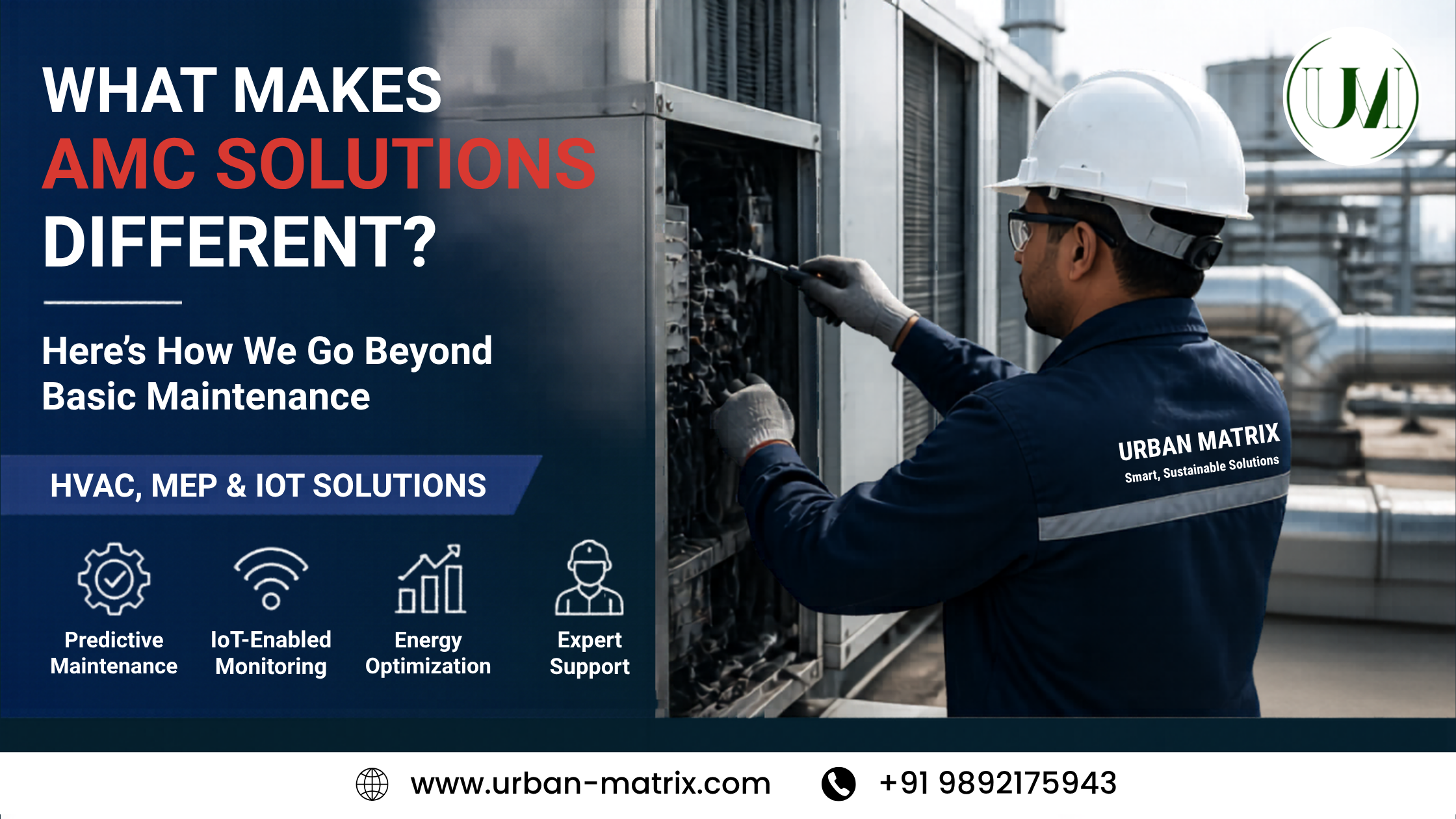
What Makes AMC Solutions Different? Here’s How We Go Beyond Basic Maintenance?
What Makes AMC Solutions Different? Here’s How We Go Beyond Basic Maintenance? When it comes to maintaining HVAC and MEP systems, businesses often face a tough choice: should they opt for basic maintenance or explore more advanced, performance-driven solutions? Many companies still rely on traditional approaches, where the focus is mainly on fixing issues as they arise. This reactive approach, however, often results in higher operational costs, more frequent breakdowns, and lower system efficiency. At Urban Matrix, we offer a solution that goes beyond basic maintenance. Our Advanced Maintenance Contracts (AMC) are designed to ensure your HVAC, MEP & IoT Solutions are functioning at their best, saving energy, improving performance, and reducing the likelihood of costly repairs. This blog will explore what makes our AMC services different and why you should consider them for your commercial or industrial facility in Mumbai. What makes AMC solutions different? Our Advanced Maintenance Contracts (AMC) offer a proactive, performance-based approach to HVAC, MEP, and IoT system maintenance. With a focus on predictive maintenance, real-time monitoring, and energy optimization, we ensure that your systems run efficiently, reducing downtime and minimizing unexpected repair costs. What is AMC? An Advanced Maintenance Contract (AMC) is a service agreement designed to maintain the functionality of HVAC, MEP, and IoT systems in commercial and industrial settings. Unlike traditional maintenance contracts, which only address issues after they occur, an AMC aims to prevent issues before they arise by focusing on predictive maintenance, real-time system monitoring, and data-driven optimizations. With our AMC solutions, we integrate advanced technologies like IoT sensors and smart building automation, allowing us to monitor system performance in real-time and take proactive action. This ensures minimal downtime, optimized energy consumption, and extended equipment life. Causes / Importance / Need for AMC Solutions Why do you need an Advanced Maintenance Contract? How It Works / Process / Step-by-Step Here’s how our AMC process works, step-by-step: Benefits of Advanced AMC Solutions Comparison with Alternatives Feature Urban Matrix AMC Solutions Traditional AMC Focus Predictive maintenance, energy optimization Reactive maintenance (fix when it breaks) Real-time Monitoring 24/7 system monitoring via IoT No continuous monitoring Energy Efficiency Energy-saving optimizations Basic maintenance, no energy focus Downtime Minimized with predictive insights Unplanned downtime due to failures Cost Savings Reduced repair and energy costs Higher operational costs Customizable Plans Tailored to your facility’s needs One-size-fits-all approach Who is a Good Candidate for AMC Solutions? AMC solutions are ideal for businesses that rely on HVAC, MEP, and IoT systems for daily operations. Some of the best candidates for our AMC services include: Cost / Pricing Factors The cost of an AMC can vary depending on the following factors: Industry Trends in 2026 In 2026, the HVAC and MEP industries are expected to see continued growth in the adoption of smart, connected systems. Key trends to watch for include: Why Choose Urban Matrix in Mumbai? Choosing the right AMC provider is crucial for your facility’s operational success. Here’s why Urban Matrix is your best choice: FAQs (People Also Ask) 1. What is the difference between predictive and reactive maintenance? Predictive maintenance uses real-time data and analytics to predict and prevent system failures, while reactive maintenance only addresses issues after they occur. 2. How can AMC solutions save energy in my HVAC systems? Our AMC services optimize system efficiency, reduce energy wastage, and integrate smart technologies to ensure that your systems are operating at peak performance. 3. How do predictive maintenance solutions work? Predictive maintenance uses IoT sensors and data analytics to monitor system performance in real-time, allowing us to identify potential issues before they cause breakdowns. 4. Are AMC services customizable? Yes, we offer tailored AMC packages based on your building’s size, system complexity, and specific needs. 5. How can I ensure my HVAC systems are compliant with safety standards? Our AMC services include regular inspections and updates to ensure that your HVAC systems meet all regulatory and safety requirements. Ready to enhance the performance and efficiency of your HVAC, MEP, and IoT systems? Contact Urban Matrix today to learn more about our Advanced Maintenance Contracts and how we can help you reduce costs, increase system longevity, and optimize energy usage. By implementing an advanced AMC solution with Urban Matrix, you ensure the future-proofing of your facility’s critical systems. Let us handle your HVAC and MEP maintenance needs so you can focus on what matters most your business.