
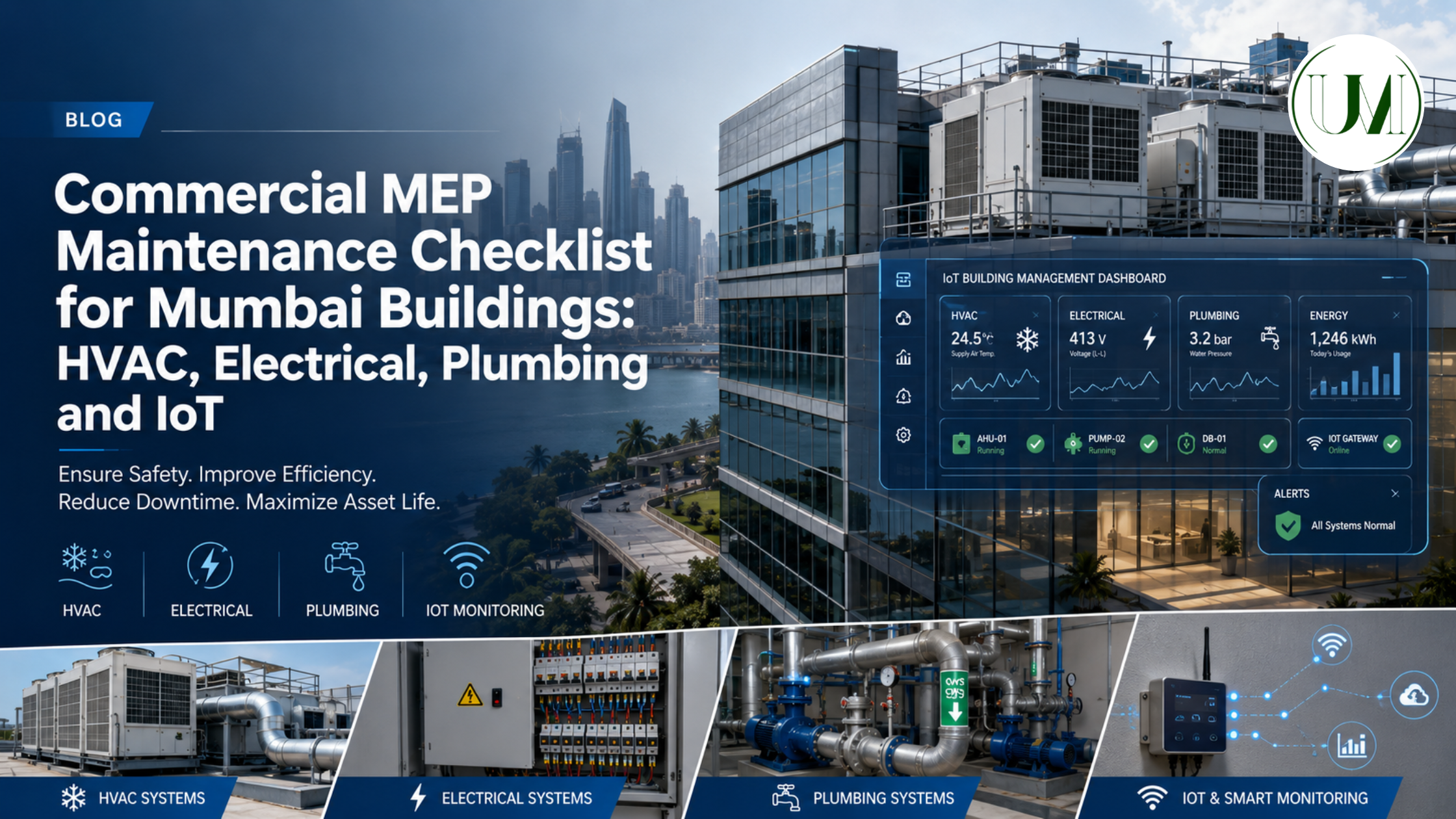
A commercial building can look perfectly normal while several hidden systems are already moving towards failure. An air-handling unit may be operating with a clogged filter. An electrical panel may have a loose connection that is generating heat. A drainage pipe may be partially blocked. A pump may be drawing more current than usual. Meanwhile, a sensor may already be showing abnormal temperature, pressure or runtime data. This is why reliable MEP Solutions in Mumbai should not begin only after something breaks. They should include planned inspections, cleaning, testing, performance monitoring and timely corrective work. MEP stands for mechanical, electrical and plumbing. These systems support cooling, ventilation, power distribution, water supply, drainage, pumping and many other functions required for a building to operate safely and comfortably. MEP engineering also plays a role in building operation, documentation and long-term maintenance. For Mumbai properties, maintenance requires special attention because commercial systems operate through heat, dust, humidity and heavy seasonal rainfall. IMD’s Mumbai observations regularly show high relative humidity during the monsoon period, reinforcing the need to protect electrical, HVAC and drainage assets from moisture-related problems. This guide provides a practical commercial MEP maintenance checklist for Mumbai buildings, covering HVAC, electrical, plumbing, drainage, pumps, IoT devices and Building Management System operations. Table of Contents What Is Commercial MEP Maintenance? Commercial MEP maintenance is the planned inspection, cleaning, testing, servicing, monitoring and repair of a building’s mechanical, electrical and plumbing systems. A complete maintenance programme may cover: The purpose of preventive MEP maintenance is to identify deterioration before it causes a breakdown, safety concern, comfort complaint or business interruption. A good MEP inspection checklist should also record what was checked, what condition was found, what measurements were taken, who performed the work and what corrective action is required. Why Mumbai Commercial Buildings Need Planned MEP Maintenance Mumbai buildings face a combination of environmental and operating conditions that can place additional pressure on MEP equipment. 1. High humidity Humidity can contribute to condensation, mould growth, corrosion, insulation deterioration and moisture entering poorly protected panels or control boxes. 2. Heavy monsoon rainfall Rain can expose weaknesses in roof drains, stormwater pipes, basement pumps, sewage systems, cable entry points and outdoor HVAC equipment. IMD’s southwest monsoon information explains that the monsoon advances across India during June and July, while Mumbai’s regional reports track substantial seasonal rainfall. 3. Coastal exposure Commercial properties near coastal areas may experience faster corrosion of outdoor units, fasteners, support frames, electrical enclosures and exposed pipework. 4. High equipment usage Offices, malls, hospitals, hotels, restaurants, warehouses and retail buildings often run their cooling, lighting, pumping and electrical systems for long hours. 5. Limited maintenance access In occupied commercial buildings, equipment may be located above ceilings, inside shafts, on terraces, in basements or in crowded plant rooms. A planned maintenance schedule reduces the need for disruptive emergency work. For these reasons, commercial building maintenance Mumbai programmes should be based on building type, equipment condition, operating hours, manufacturer recommendations and seasonal risks not on a fixed one-size-fits-all calendar. Daily, Monthly, Quarterly and Annual MEP Checklist The following schedule can be adapted for offices, retail properties, hotels, hospitals, commercial complexes and warehouses. Frequency Recommended checks Daily Review alarms, temperatures, pressure, unusual noise, leakage, equipment status and critical pump operation Weekly Inspect filters, drain trays, panel rooms, pump rooms, visible pipelines and equipment housekeeping Monthly Test selected controls, inspect electrical panels, clean filters, review energy data and inspect drainage points Quarterly Service HVAC equipment, check electrical connections, test pumps, inspect valves and review BMS trends Half-yearly Conduct deeper cleaning, performance testing, thermography where required and pre/post-monsoon checks Annually Complete an asset condition review, safety tests, major servicing, calibration and maintenance-plan update This daily monthly quarterly and annual MEP checklist is a planning framework. Actual intervals should be confirmed using equipment manuals, applicable requirements, site conditions and professional assessment. Commercial HVAC Maintenance Checklist HVAC systems affect temperature, ventilation, humidity, indoor air quality and energy use. ASHRAE Standard 180 establishes minimum inspection and maintenance requirements intended to preserve thermal comfort, energy efficiency and indoor air quality in commercial building HVAC systems. A professional commercial HVAC maintenance Mumbai programme should cover more than basic AC servicing. 1. Air filters Dirty filters reduce airflow and can increase pressure on fans and cooling coils. 2. Air Handling Units Use an AHU maintenance checklist to inspect: Also check for unusual sound, vibration, rust, water accumulation and air leakage. 3. Chillers A chiller maintenance checklist may include: The exact procedure depends on whether the building uses an air-cooled or water-cooled system. 4. Cooling towers Inspect: Regular cooling tower maintenance supports heat rejection and reduces avoidable stress on the chiller system. 5. Condensate drainage Blocked condensate drains can cause leakage, ceiling damage, odour and mould. 6. Airflow and ventilation 7. Controls and sensors 8. Indoor air quality Commercial HVAC checklist guidance commonly includes filter inspection, coil cleaning, refrigerant checks, electrical connections, controls, belts, motors and airflow verification. How to prevent HVAC breakdowns in commercial buildings The best approach is to combine cleaning, condition checks, operating-data review and timely repairs. Repeatedly resetting alarms without investigating their cause can turn a small issue into a larger failure. Businesses comparing HVAC AMC services Mumbai should therefore ask whether the service includes readings, reports, alarm review, component inspection and root-cause analysis not only routine cleaning. Electrical Preventive Maintenance Checklist Commercial electrical systems must be inspected by competent professionals. BIS’s electrical installation committee scope includes standards relating to safety in the design, erection and maintenance of electrical installations. The following electrical maintenance checklist for commercial buildings provides a useful starting point. 1. Electrical panels Inspect: 2. Warning signs requiring attention 3. Electrical thermography Electrical thermography can help identify abnormal heat patterns in connections, breakers, cables and busbars without waiting for visible failure. Thermal findings should be interpreted by qualified personnel and followed by suitable corrective work. 4. Earthing and protection systems 5. Power quality and load 6. Backup power Include: Providers offering electrical maintenance services Mumbai should maintain measurement records,

How Do You Choose the Right MEP Contractors in Mumbai for Commercial Projects?
How Do You Choose the Right MEP Contractors in Mumbai for Commercial Projects? Choosing the right MEP contractors in Mumbai can directly affect the performance, safety, energy efficiency, and long-term maintenance cost of your commercial building. Whether you are developing an office, hospital, hotel, retail space, industrial unit, warehouse, or commercial complex, your MEP systems must work together smoothly. MEP stands for Mechanical, Electrical, and Plumbing. In commercial projects, this includes HVAC systems, electrical power distribution, lighting, plumbing, drainage, ventilation, fire safety systems, building automation, and sometimes IoT-based monitoring. Many businesses search for MEP contractors near me or HVAC contractors in Mumbai only when there is a technical issue. But the right decision should begin much earlier, during planning, design, installation, and execution. Poor MEP planning can lead to frequent breakdowns, high electricity bills, water leakage, poor cooling, safety risks, project delays, and expensive rework. That is why selecting experienced commercial MEP contractors in Mumbai is not just a vendor decision. It is a long-term investment in building performance. How to Choose the Right MEP Contractors in Mumbai? To choose the right MEP contractors in Mumbai, check their commercial project experience, HVAC and MEP expertise, technical team strength, safety compliance, documentation quality, AMC support, response time, and ability to coordinate mechanical, electrical, plumbing, fire safety, and building automation systems under one planned execution process. What Are MEP Contractors in Mumbai? MEP contractors in Mumbai are specialized professionals or companies that design, install, execute, maintain, and coordinate mechanical, electrical, and plumbing systems for commercial and industrial buildings. In simple words, they make sure your building has proper cooling, ventilation, electrical supply, lighting, water flow, drainage, fire safety, and system coordination. For commercial projects, MEP work is much more complex than residential work. A small mistake in load calculation, duct layout, electrical capacity, plumbing slope, or equipment selection can affect the entire building. Professional MEP services in Mumbai usually include: For many commercial spaces, hiring HVAC and MEP contractors in Mumbai is better than hiring separate vendors for each system. A coordinated team reduces confusion, saves time, and improves long-term system performance. MEP contractors manage the core building systems that keep a commercial property functional, safe, comfortable, and energy efficient. Why Are MEP Services Important for Commercial Buildings? MEP systems are the backbone of every commercial building. They affect how people experience the space every day. A building may look modern from the outside, but if its HVAC, electrical, plumbing, and ventilation systems are poorly planned, users will face discomfort, breakdowns, water issues, electrical faults, and high operational costs. MEP services are important because they help with: Cooling demand is becoming a major concern in India. The International Energy Agency reported that India’s electricity consumption due to space cooling increased by 21% between 2019 and 2022, and space cooling now accounts for nearly 10% of electricity demand. This makes energy-efficient HVAC and MEP planning especially important for commercial buildings in cities like Mumbai. India’s Cooling Action Plan also targets a 20–25% reduction in cooling demand and a 25–40% reduction in cooling energy requirements by 2037–38, highlighting the importance of efficient cooling design, better technology, and trained service professionals. This is why working with the best MEP contractors in Mumbai can help businesses reduce operational pressure and improve building performance. How Do MEP Contractors Work Step by Step? Professional MEP contractors follow a planned process. They do not simply install equipment and leave the site. A good contractor studies the building requirement, checks technical feasibility, coordinates with different teams, executes the project, tests the systems, and supports long-term maintenance. Step 1: Site Assessment The contractor first checks the commercial building type, usage pattern, occupancy, equipment load, floor layout, ventilation requirement, electrical capacity, water demand, drainage needs, and operational hours. This helps them understand what type of MEP system is required. For example, an office building, hospital, restaurant, data room, warehouse, and retail showroom will all have different HVAC and MEP needs. Step 2: Requirement Mapping The next step is to understand the client’s needs. This may include: This step is important because commercial MEP services in Mumbai must match both technical and business requirements. Step 3: Design and Planning MEP consultants in Mumbai or MEP design teams prepare layouts, technical drawings, system plans, load calculations, duct routes, pipe routes, cable routes, equipment placement, and coordination drawings. Good planning helps prevent clashes between HVAC ducts, electrical trays, plumbing lines, drainage systems, and fire safety networks. Step 4: System Coordination Commercial buildings need proper coordination between multiple systems. For example: This is where experienced MEP project contractors in Mumbai add value. Step 5: Installation and Execution After planning, the contractor starts site execution. This may include: A professional HVAC company in Mumbai or MEP company follows safety standards, approved drawings, and quality checks during installation. Step 6: Testing and Commissioning Testing is one of the most important stages. The team checks: Commissioning is the process of verifying that building systems are installed and operating as intended. The U.S. Department of Energy notes that HVAC commissioning often identifies faulty equipment and mistakes that waste energy and affect comfort or indoor air quality. ASHRAE also describes commissioning as a quality-oriented process that verifies and documents whether building systems meet defined project requirements. Step 7: AMC and Preventive Maintenance After installation, reliable MEP maintenance services in Mumbai become important. Preventive maintenance includes: This helps reduce emergency repairs and improves system life. The right MEP contractor follows a complete process: site assessment, design, coordination, installation, testing, commissioning, and maintenance. What Are the Benefits of Hiring Professional MEP Contractors? Hiring professional MEP contractors for commercial buildings in Mumbai can give both technical and financial benefits. Key benefits include: For commercial spaces, these benefits directly affect business operations. The HVAC system fails in an office, employees become uncomfortable. plumbing fails in a hotel, guest experience is affected. If electrical systems are overloaded in a retail space, safety becomes a risk. If ventilation is poor in a hospital, indoor air quality
Common HVAC and MEP Design Mistakes That Increase Operational Costs
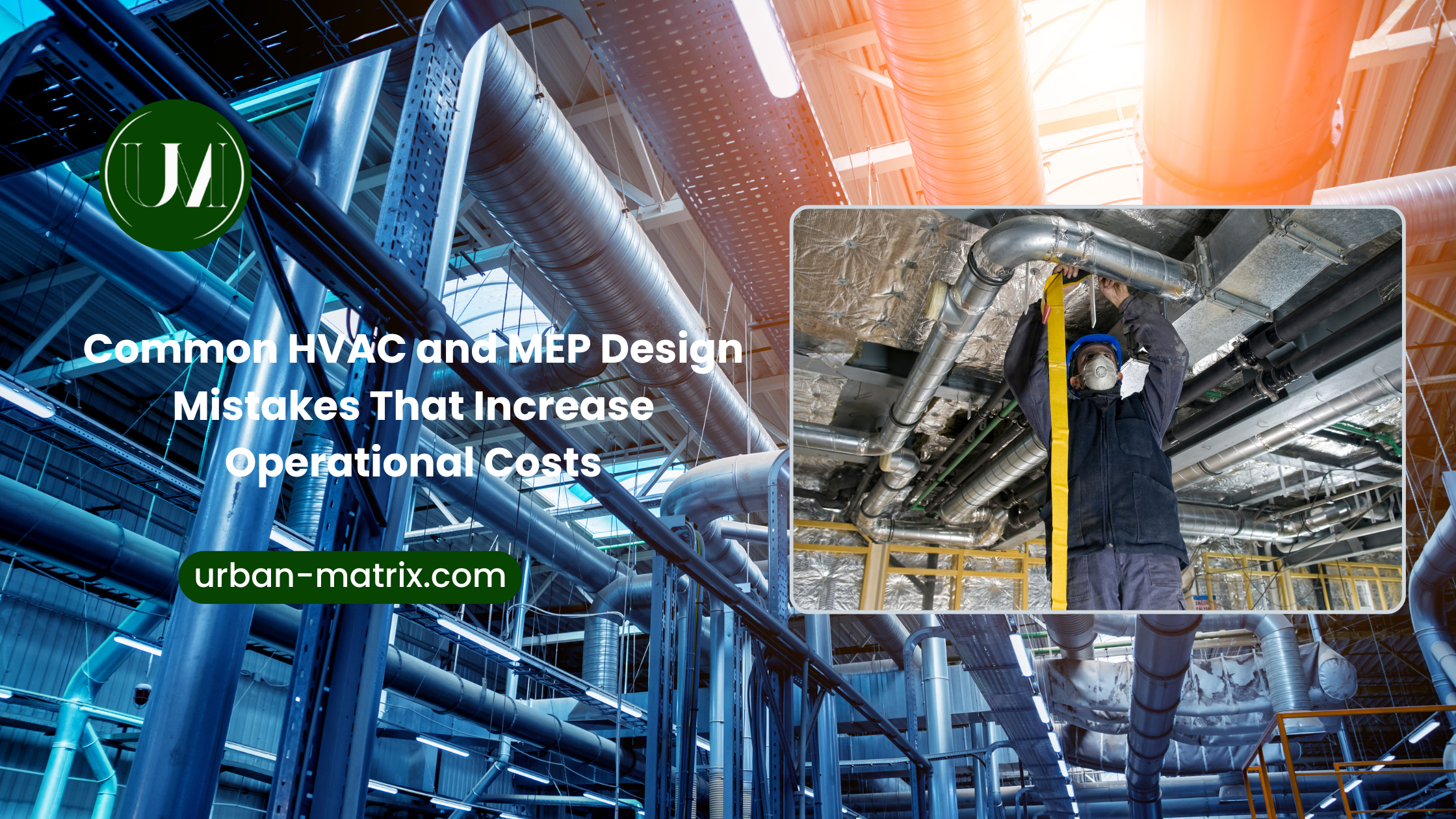
When a building starts facing high electricity bills frequent equipment failures or uneven indoor comfort the issue rarely begins with day to day operations. In most cases the root cause lies much earlier at the design stage. At Urban Matrix we have worked across offices hospitals malls hotels and industrial facilities and one pattern appears repeatedly. Small HVAC and MEP design oversights made during planning quietly turn into long term operational losses. This article explains the most common HVAC and MEP design mistakes that increase operational costs and how well planned HVAC and MEP solutions can help avoid them. Why HVAC and MEP Design Matters More Than Most People Realize HVAC and MEP systems are not just background utilities. They directly influence how efficiently a building runs and how much it costs to operate over time. They affect energy consumption equipment lifespan maintenance budgets occupant comfort and even long term asset value. When these systems are designed correctly they operate quietly and efficiently. When they are not they become a constant financial drain. Designing for Ideal Conditions Instead of Real World Usage Many HVAC designs are created based on assumptions such as fixed occupancy standard working hours and stable heat loads. In reality buildings evolve. Offices extend operating hours hospitals add new medical equipment retail spaces experience fluctuating footfall and data loads continue to rise. If HVAC systems are not designed with flexibility in mind the equipment is forced to operate under continuous stress. This leads to higher energy consumption faster wear and tear and a shorter system lifespan. Poor Coordination Between HVAC and Other MEP Services One of the most expensive design mistakes is a lack of coordination between HVAC electrical plumbing and fire systems. This often shows up as ducts clashing with beams cable trays blocking airflow or last minute routing changes during execution. Even if installation looks complete these coordination issues reduce system efficiency from day one. The result is airflow imbalance uneven cooling pressure losses and higher operating costs throughout the building’s life. Incorrect Equipment Sizing Many people assume bigger equipment delivers better performance. In reality both oversizing and undersizing create serious problems. Oversized systems cycle on and off frequently which wastes energy. Undersized systems run continuously and overheat critical components. Both scenarios increase breakdowns maintenance frequency and unexpected shutdowns. Over time this translates into higher annual maintenance costs and unpredictable repair expenses. Ignoring Energy Efficient Design Principles Reducing upfront project cost by cutting energy efficiency features may look attractive during construction but it significantly increases long term expenses. Common mistakes include lack of zoning using a single thermostat for large areas and avoiding variable speed drives or smart controls. In cities like Mumbai where HVAC systems run for most of the year these design gaps compound operational costs month after month. The outcome is consistently high electricity bills with very little control over consumption. Poor Planning for Maintenance Access Maintenance is often treated as an afterthought during design. This results in air handling units placed in hard to reach areas valves hidden above false ceilings and insufficient clearance around electrical panels. Even routine servicing becomes time consuming risky and disruptive. Over time higher labour costs longer downtime and safety concerns become unavoidable. No Focus on Lifecycle Costs Many projects focus only on initial capital expenditure while ignoring operating expenses. A strong HVAC and MEP design considers energy costs over ten to fifteen years maintenance frequency and equipment replacement cycles. When lifecycle costing is ignored systems may be cheap to install but expensive to operate. This leads to unplanned capital expenses budget overruns and financial stress later in the building’s life. Lack of Smart Monitoring and Automation Without proper monitoring systems energy leakages remain invisible performance degradation goes unnoticed and faults are detected only after failures occur. Modern HVAC and MEP solutions rely on sensors automation and data driven insights to optimise performance continuously. Without these tools maintenance becomes reactive instead of predictive increasing both cost and risk. How the Right HVAC and MEP Solutions Control Operational Costs Effective HVAC and MEP solutions are not about adding complexity. They are about smarter planning. They are built around real usage patterns future scalability energy efficiency coordinated system design and easy maintenance access. When done right the benefits are clear. Lower energy consumption longer equipment life fewer breakdowns and predictable maintenance budgets. Why Experience Matters in HVAC and MEP Design Designing cost efficient HVAC and MEP systems requires technical expertise operational understanding and practical experience. At Urban Matrix, systems are designed by engineers who understand how buildings actually operate not just how they look on drawings. This approach ensuresDesign decisions are practicalFuture operational challenges are anticipatedCosts are controlled over the full lifecycle Experience bridges the gap between design intent and operational reality. How the Right HVAC and MEP Solutions Reduce Operational Costs Effective HVAC and MEP solutions focus on long term performance rather than short term savings. A strong design approach includesRealistic load assessmentFuture ready system capacityIntegrated HVAC and MEP coordinationEnergy efficient equipment selectionMaintenance friendly layoutsLifecycle cost evaluation The result isLower energy consumptionFewer breakdownsExtended equipment lifespanStable operating budgets Operational efficiency is designed not achieved by chance. Conculsion:- HVAC and MEP design mistakes rarely cause immediate failure. Instead they quietly increase monthly expenses through inefficiency energy loss and excessive maintenance. For commercial buildings hospitals hotels and industrial facilities investing in well planned HVAC and MEP solutions in Mumbai is not an added cost. It is a strategic decision that protects long term performance reliability and operating budgets. Frequently Asked Questions 1.What is the biggest HVAC design mistake that increases operating cost Designing systems based on ideal assumptions instead of real usage patterns leads to continuous equipment stress and higher energy consumption. 2.How does HVAC MEP coordination affect energy efficiency Poor coordination causes airflow obstructions pressure losses and uneven cooling which increases power usage and reduces comfort. 3.Is oversized HVAC equipment better for safety No oversized systems waste energy short cycle and experience faster component wear increasing maintenance costs.
HVAC vs MEP Systems: Key Differences Every Developer Should Know
When planning a commercial or residential building, one of the biggest decisions developers make happens long before construction begins—choosing the right HVAC and MEP solutions. Many developers often use HVAC and MEP interchangeably. While HVAC is a critical part of a building, it is not the same as MEP. Understanding the difference between HVAC and MEP systems can directly impact construction cost, operational efficiency, energy bills, and long-term asset value. This guide breaks down HVAC vs MEP systems in simple terms and explains why developers, architects, and project owners must understand both—especially when planning large projects in Mumbai and other Indian metros. What Is HVAC? Explained for Developers HVAC stands for Heating, Ventilation, and Air Conditioning.It focuses specifically on indoor climate control and air quality. Core Functions of HVAC Systems Where HVAC Is Used In simple terms, HVAC ensures that occupants feel comfortable and that equipment operates in controlled environmental conditions. What Are MEP Systems? A Broader Building Framework MEP stands for Mechanical, Electrical, and Plumbing systems.. Components of MEP Systems Mechanical Electrical Plumbing MEP systems work together to make a building functional, safe, and compliant. Why Developers Must Understand the Difference Many cost overruns and operational failures happen because HVAC is designed without proper MEP coordination. Common Developer Mistakes A building may look perfect on drawings, but poor HVAC and MEP integration can lead to: HVAC and MEP Solutions: Why Integrated Design Matters Modern buildings demand integrated HVAC and MEP solutions, not fragmented systems. Benefits of Integrated HVAC and MEP Engineering At Urban Matrix, we focus on end-to-end HVAC and MEP solutions that align architectural intent with real-world performance. HVAC vs MEP for Commercial Projects in India In Indian conditions—especially in cities like Mumbai—buildings face: Here, HVAC design alone is not enough.MEP coordination ensures: This is why HVAC and MEP solutions in Mumbai must be designed together from day one. Which One Do Developers Actually Need: HVAC or MEP? The answer is both—but with the right approach. Choose HVAC When: Choose Full MEP Solutions When: For most large projects, complete HVAC and MEP solutions deliver better ROI than isolated system upgrades. Long-Term Cost Impact: HVAC vs MEP Decisions Poor early decisions in HVAC and MEP planning can increase: Smart developers treat HVAC and MEP as strategic investments, not cost centers. Why Developers Trust Professional HVAC and MEP Consultants Experienced HVAC and MEP consultants help developers: Urban Matrix specializes in HVAC and MEP solutions for commercial buildings, helping developers bridge the gap between drawings and real-world performance. FAQs: HVAC vs MEP Systems (AEO Optimized) Is HVAC part of MEP? Yes. HVAC falls under the Mechanical (M) component of MEP systems. Which is more important HVAC or MEP? MEP is broader and includes HVAC. Both are equally important for building performance. Do residential projects need full MEP systems? Yes. Modern residential projects require integrated HVAC and MEP planning for safety, efficiency, and approvals. Why are HVAC and MEP solutions important in Mumbai? Due to humidity, high occupancy, power loads, and strict safety regulations, integrated HVAC and MEP solutions are essential. Final Thoughts: HVAC vs MEP Is Not a Comparison—It’s a Combination HVAC and MEP are not competing systems.They are interdependent building lifelines. Developers who understand this difference early: If you are planning your next project and want future-ready HVAC and MEP solutions, Urban Matrix is here to help. Ready to Build Smarter? Talk to Urban Matrix for expert HVAC and MEP solutions tailored for commercial and residential developments in Mumbai and across India.