

How Should You Prepare Your HVAC System for Seasonal Changes Before Summer Hits? Before summer arrives in Mumbai, your HVAC system starts facing higher cooling demand, longer running hours, humidity load, and more pressure on compressors, filters, ducts, pumps, and electrical panels. For commercial buildings, offices, hospitals, hotels, malls, warehouses, and industrial facilities, even a small HVAC issue can quickly turn into poor cooling, high electricity bills, equipment overheating, or sudden breakdowns. That is why HVAC maintenance before summer is not just a routine service. It is a smart building performance decision. A proper summer HVAC maintenance checklist helps you identify weak points before peak heat begins. It also supports better airflow, stable cooling, energy efficiency, indoor air quality, and lower downtime. For businesses in Mumbai, choosing the right partner for HVAC, MEP & IoT Solutions can make a major difference. With smart HVAC maintenance, MEP system inspection, and IoT-based HVAC monitoring, building owners can move from reactive repairs to predictive, performance-driven maintenance. Preparing your HVAC system before summer means checking filters, coils, refrigerant levels, ducts, airflow, thermostats, electrical panels, pumps, motors, and IoT sensors. A seasonal HVAC maintenance plan helps prevent overheating, poor cooling, high energy bills, and unexpected breakdowns in commercial buildings. What Is Seasonal HVAC Maintenance Before Summer? Seasonal HVAC maintenance is a planned inspection and servicing process done before weather conditions change. Before summer, it focuses on preparing cooling systems to handle higher temperatures, longer operating hours, humidity, and increased occupancy loads. It includes checking: In commercial spaces, HVAC maintenance is closely connected with MEP services because cooling performance depends on mechanical, electrical, and plumbing support systems. For example, a clean coil improves cooling, but if the pump is inefficient, electrical panel is overloaded, or drain line is blocked, the system may still underperform. Mini Summary Box Why Is HVAC Maintenance Important Before Summer? Summer puts extra pressure on every part of the HVAC system. In Mumbai, the combination of heat, humidity, dust, and long operating hours makes preventive maintenance even more important. The India Cooling Action Plan aims to reduce cooling demand by 20% to 25% and cooling energy requirements by 25% to 40% by 2037–38, which shows how important efficient cooling has become for India’s building sector. A 2025 study on large commercial buildings in hot climates found that integrated HVAC energy-efficiency measures delivered 20.77% electricity savings and 27.97% chilled water savings in a simulated office building. Main reasons to service HVAC before summer Common HVAC problems in summer Many commercial building cooling problems start small. A dirty filter, blocked coil, loose electrical connection, or wrong thermostat setting can slowly reduce efficiency and increase operating pressure. How Does HVAC Summer Maintenance Work? Step-by-Step Process A proper HVAC system inspection before summer should not be limited to basic cleaning. It should follow a complete technical process. Step 1: Complete HVAC and MEP System Assessment The first step is a full inspection of your building’s HVAC and MEP setup. This includes: Experienced HVAC MEP contractors in Mumbai check how the entire system is performing, not just one machine. Step 2: Clean or Replace Air Filters Dirty filters are one of the most common causes of poor airflow. Blocked filters can: For commercial HVAC maintenance Mumbai businesses should inspect filters more frequently during summer because dust, pollution, and continuous usage increase filter load. Step 3: Clean Coils and Drain Pans Cooling coils, heating coils, drain pans, and humidifier sections inside air handling equipment can become contaminated. ASHRAE guidance notes that fouled coils and drain pans may need proper cleaning and regular monitoring. Dirty coils reduce heat transfer. This makes the compressor work harder and increases the risk of overheating. Step 4: Check Refrigerant Level and Compressor Health Low refrigerant can reduce cooling performance and damage the compressor. Technicians should check: This step is important when you want to know how to prevent HVAC overheating in summer. Step 5: Inspect Ductwork and Airflow Poor airflow can make even a good HVAC system feel ineffective. Inspection should include: For offices, malls, hospitals, and hotels, airflow balancing is important because different zones have different occupancy levels and heat loads. Step 6: Test Thermostats, Controls, and Sensors Thermostat problems can cause overcooling, undercooling, or continuous running. Check: This is where smart HVAC maintenance becomes valuable. Step 7: Inspect Electrical Panels, Motors, and Pumps HVAC is connected to electrical and mechanical performance. MEP inspection should include: This is why businesses often search for MEP contractors in Mumbai, MEP consultants in Mumbai, or MEP maintenance services in Mumbai before summer. Step 8: Add IoT-Based HVAC Monitoring IoT-based HVAC monitoring uses sensors and connected dashboards to track system performance in real time. It can monitor: AI and IoT are becoming important in HVAC because modern systems can analyze temperature, humidity, CO₂, particulate matter, airflow, pressure, and occupancy data to optimize performance. Mini Summary Box What Are the Benefits of Preventive HVAC Maintenance? A well-planned HVAC preventive maintenance strategy gives both technical and financial benefits. Key benefits For commercial properties, preventive maintenance is not just about comfort. It directly affects employee productivity, customer experience, energy bills, and operational continuity. When combined with HVAC, MEP & IoT Solutions, the system becomes easier to monitor, easier to maintain, and easier to optimize. Reactive Repair vs Preventive Maintenance vs Smart HVAC Maintenance Approach How It Works Best For Limitation Reactive Repair Fix the system only after breakdown Small, low-usage systems High downtime and emergency cost Preventive HVAC Maintenance Regular inspection, cleaning, and servicing Commercial buildings and offices Needs proper scheduling Smart HVAC Maintenance with IoT Uses sensors, alerts, dashboards, and predictive maintenance Large buildings, hospitals, malls, hotels, IT parks Requires initial IoT setup Turnkey HVAC & MEP Services End-to-end design, installation, maintenance, and optimization New projects and major upgrades Needs experienced turnkey contractors in Mumbai For modern commercial properties, smart HVAC maintenance gives better control because it detects early warning signs before failure happens. Who Needs HVAC Summer Maintenance? Summer HVAC maintenance is useful for any building
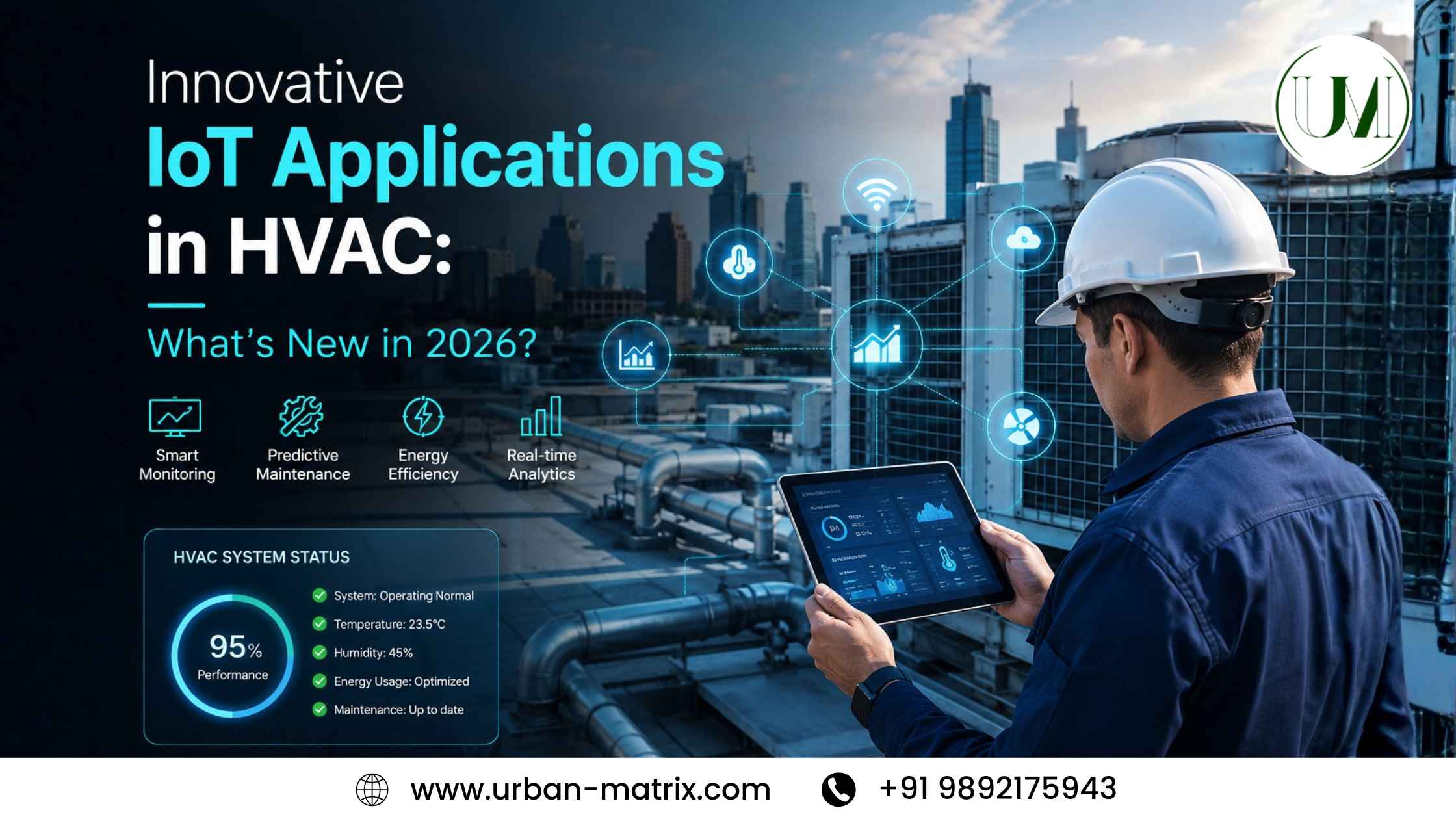
What are the Most Innovative IoT Applications in HVAC: What’s New in 2026?
What are the Most Innovative IoT Applications in HVAC: What’s New in 2026? In 2026, commercial buildings are no longer judged only by their size, design, or cooling capacity. They are judged by how intelligently they operate. For business owners, facility managers, hospitals, malls, offices, and industrial spaces, HVAC problems are not just technical issues. They directly affect comfort, energy bills, productivity, compliance, and business continuity. Traditional HVAC systems often work on fixed schedules, manual checks, and reactive maintenance. That approach can lead to energy waste, sudden breakdowns, poor indoor comfort, and higher repair costs. In a high-demand city like Mumbai, where commercial cooling loads are heavy and humidity levels are challenging, smarter HVAC management has become essential. This is why HVAC, MEP & IoT Solutions are gaining serious importance. With IoT in HVAC systems, buildings can use sensors, automation, AI analytics, and smart dashboards to monitor performance in real time. For companies looking for HVAC MEP contractors in Mumbai, the future is clearly moving toward connected, predictive, and energy-efficient building systems. Global building operations account for nearly 30% of final energy consumption, which makes efficient building technology a major priority for businesses and policymakers. Innovative IoT applications in HVAC in 2026 include smart HVAC monitoring systems, AI-based fault detection, HVAC predictive maintenance, IoT sensors for HVAC, energy optimization, indoor air quality tracking, and smart building automation. These solutions help commercial buildings reduce downtime, improve comfort, lower energy waste, and manage HVAC, MEP & IoT Solutions more efficiently. What is Innovative IoT Applications in HVAC? Innovative IoT applications in HVAC refer to the use of connected sensors, smart devices, cloud platforms, automation systems, and AI-powered analytics to improve the way HVAC systems are monitored, controlled, and maintained. In simple terms, IoT makes HVAC systems smarter. A normal HVAC system cools or ventilates a space based on fixed settings. An IoT based HVAC system collects live data from different parts of the building and uses that data to improve system performance. This data may come from: With these inputs, a smart HVAC monitoring system can show what is happening inside the system before a failure occurs. It helps facility teams understand whether the HVAC equipment is running efficiently, consuming excess power, or showing early signs of damage. For commercial buildings in Mumbai, this is especially useful because HVAC systems often run for long hours and serve multiple zones, floors, and departments.Innovative IoT applications in HVAC use sensors, data, automation, and AI to make HVAC systems more intelligent, efficient, and predictable. Why is IoT Important for HVAC Systems in 2026? IoT is important because HVAC systems are among the largest energy-consuming systems in commercial buildings. When HVAC performance is not monitored properly, even small inefficiencies can become expensive over time. Key Reasons IoT is Needed For companies searching for MEP maintenance services in Mumbai, IoT creates a more transparent and measurable way to manage HVAC and MEP assets. IoT is important because it helps reduce energy waste, improve uptime, support sustainability, and make HVAC maintenance more data-driven. How Does IoT Work in HVAC Systems? IoT in HVAC systems works by connecting equipment, sensors, software, and automation controls into one intelligent ecosystem. Step 1: HVAC and MEP System Assessment The process starts with a complete assessment of the building’s HVAC and MEP infrastructure. This includes checking: The purpose is to understand the current system condition, energy usage pattern, and maintenance gaps. Step 2: IoT Sensor Installation IoT sensors for HVAC are installed at important system points. These sensors collect real-time data from equipment and indoor spaces. For example: Step 3: Data Collection and Connectivity The collected data is sent to a centralized platform. This may be cloud-based or connected to a building automation system. This gives facility managers a live view of HVAC performance across zones, floors, or multiple buildings. Step 4: Smart HVAC Monitoring Dashboard A smart HVAC monitoring system displays key information such as: This makes it easier to track system performance without depending only on manual inspections. Step 5: AI-Based Fault Detection AI and IoT in HVAC work together by studying performance patterns. If a system starts behaving abnormally, the dashboard can trigger an alert. For example, the system may detect: Step 6: Predictive Maintenance HVAC Alerts Instead of waiting for breakdowns, predictive maintenance HVAC alerts help teams act early. This allows maintenance teams to schedule repairs before the problem affects operations. Step 7: Automated HVAC Optimization HVAC automation systems can adjust cooling and ventilation based on: This is where IoT HVAC solutions become highly valuable for offices, malls, hospitals, and commercial facilities. IoT HVAC systems work through sensors, live dashboards, AI-based fault detection, predictive alerts, and automated system control. Benefits of IoT Applications in HVAC IoT-enabled HVAC systems offer practical benefits for commercial buildings and facility teams. Key Benefits Johnson Controls’ 2026 smart-building outlook highlights AI-driven automation, energy efficiency, and smart sustainable spaces as important trends shaping future buildings. For businesses needing commercial HVAC maintenance Mumbai, IoT makes maintenance more proactive, transparent, and performance-focused. The biggest benefits of IoT in HVAC are energy savings, lower downtime, better comfort, predictive maintenance, and smarter facility control. Traditional HVAC vs IoT-Enabled HVAC Systems Comparison Point Traditional HVAC System IoT-Enabled HVAC System Monitoring Manual checks Real-time smart HVAC monitoring Maintenance Reactive or schedule-based Predictive and condition-based Fault Detection After complaint or breakdown Early AI-based fault alerts Energy Usage Fixed operation pattern Optimized based on data Control Manual thermostat or basic controls HVAC automation system Reporting Limited reports Detailed performance analytics Comfort May vary by zone Zone-wise smart comfort control Air Quality Limited visibility CO₂, humidity, and IAQ tracking Cost Control Difficult to measure Easier energy and AMC planning Best For Basic buildings Commercial and smart buildings Traditional HVAC systems can still perform well, but they often lack visibility. The problem is not always the machine. Sometimes, the problem is that the facility team does not have enough data to understand what is going wrong. An IoT enabled HVAC system solves this gap
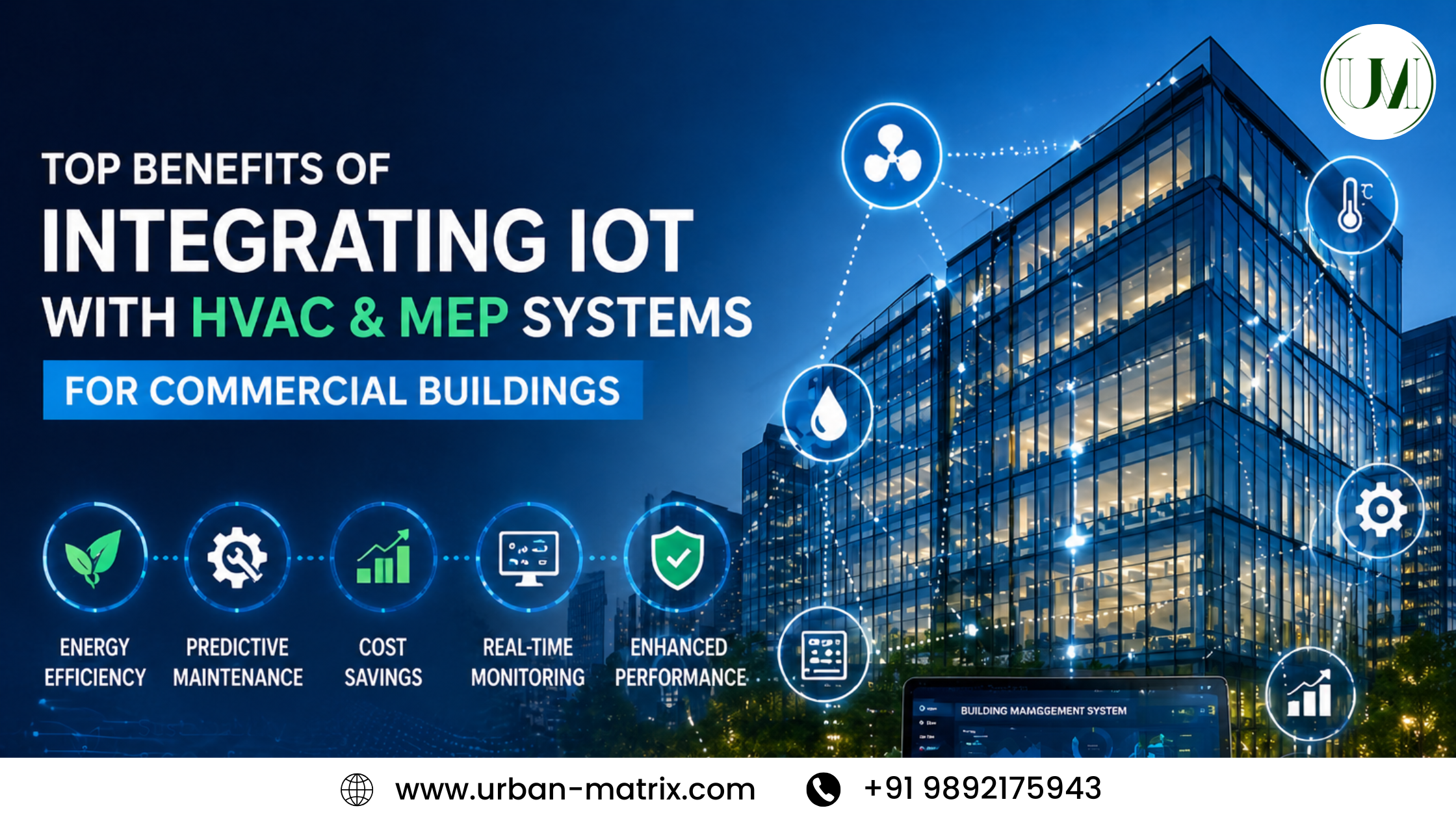
Top Benefits of Integrating IoT with HVAC & MEP Systems for Commercial Buildings
Top Benefits of Integrating IoT with HVAC & MEP Systems for Commercial Buildings. In the rapidly evolving landscape of building management, commercial property owners and facility managers are always looking for ways to increase efficiency, reduce costs, and improve overall building performance. A game-changing solution is the integration of IoT in HVAC and MEP systems. By leveraging the power of the Internet of Things (IoT), building managers can enhance energy efficiency, reduce downtime, and make their buildings smarter. The need for smart building solutions is growing, especially in places like Mumbai, where the commercial real estate market is booming. Traditional HVAC systems and MEP solutions are often outdated, leading to higher energy costs, frequent breakdowns, and poor building performance. IoT integration in HVAC and MEP systems solves these challenges by providing real-time monitoring, predictive maintenance, and data-driven optimization Integrating IoT with HVAC and MEP systems in commercial buildings offers substantial benefits, including energy savings, predictive maintenance, cost reduction, and enhanced building performance. It enables real-time monitoring, intelligent automation, and improved efficiency, making buildings smarter and more sustainable. What is IoT in HVAC & MEP Systems? IoT (Internet of Things) refers to a network of devices embedded with sensors that collect, transmit, and analyze data. In HVAC systems and MEP solutions, IoT enables real-time monitoring and optimization of various systems like heating, cooling, lighting, and ventilation. With IoT integration, building managers can track energy consumption, detect potential failures early, and automate system adjustments for maximum efficiency. For commercial buildings in Mumbai, IoT transforms traditional HVAC and MEP systems into intelligent, interconnected systems that optimize energy use and reduce maintenance costs. Causes / Importance / Need Why integrate IoT into HVAC and MEP systems for commercial buildings? How IoT Works in HVAC & MEP Systems (Step-by-Step) Step 1: Sensor Installation Smart IoT sensors are installed in key components of HVAC and MEP systems. These sensors monitor parameters like: Step 2: Real-Time Data Collection The sensors collect data continuously and send it to a centralized platform for real-time analysis. This allows facility managers to monitor HVAC and MEP systems from a single dashboard. Step 3: Data Analysis & Pattern Recognition Advanced analytics software processes the data to identify patterns, anomalies, and inefficiencies. For example, it can detect unexpected energy spikes or drops in HVAC system performance, prompting corrective actions. Step 4: Predictive Maintenance With IoT integration, predictive algorithms analyze the data to predict when a system is likely to fail. This allows for scheduled maintenance, reducing downtime and the risk of unexpected breakdowns. Step 5: Automation and Optimization Based on the insights gathered, the system can automatically adjust HVAC settings (e.g., temperature, airflow) to optimize performance, reduce energy consumption, and maintain comfort levels. Benefits of Integrating IoT in HVAC & MEP Systems 1. Energy Efficiency 2. Predictive Maintenance 3. Cost Reduction 4. Improved Comfort and Air Quality 5. Centralized Control 6. Sustainability Comparison with Alternatives Feature Traditional HVAC & MEP Systems IoT-Integrated HVAC & MEP Systems Energy Efficiency Low, high energy consumption Optimized, reduces energy use by up to 30% Maintenance Reactive, unpredictable Predictive, scheduled maintenance Cost Management High operational costs Cost savings through energy optimization and predictive maintenance Control Manual adjustments required Centralized, automated control through smart dashboards Air Quality Inconsistent Real-time air quality monitoring and adjustment Sustainability Limited impact Helps achieve energy-saving goals and reduces carbon footprint Who Needs IoT Integration for HVAC & MEP Systems? Businesses that can benefit from IoT integration in HVAC and MEP systems include: Cost / Pricing Factors The cost of integrating IoT in HVAC & MEP systems depends on: The return on investment (ROI) is significant, as energy savings, reduced maintenance costs, and improved operational efficiency outweigh the initial installation cost. Industry Trends in 2026 Why Choose Urban Matrix in Mumbai? Urban Matrix is a leading provider of IoT-based HVAC & MEP solutions in Mumbai. We specialize in integrating smart technologies into your HVAC and MEP systems to enhance energy efficiency, reduce costs, and improve overall building performance. Our team of expert HVAC MEP contractors offers seamless integration and ongoing support, ensuring your systems operate at their best. Whether you’re looking to improve energy efficiency or maintain optimal comfort, Urban Matrix has the solutions for your commercial building in Mumbai. FAQs (People Also Ask) Are you ready to make your commercial building smarter, more efficient, and sustainable? Contact Urban Matrix today for expert IoT HVAC & MEP solutions in Mumbai. Optimize your energy use, reduce costs, and enhance building performance with our cutting-edge solutions. Get in touch with us now!
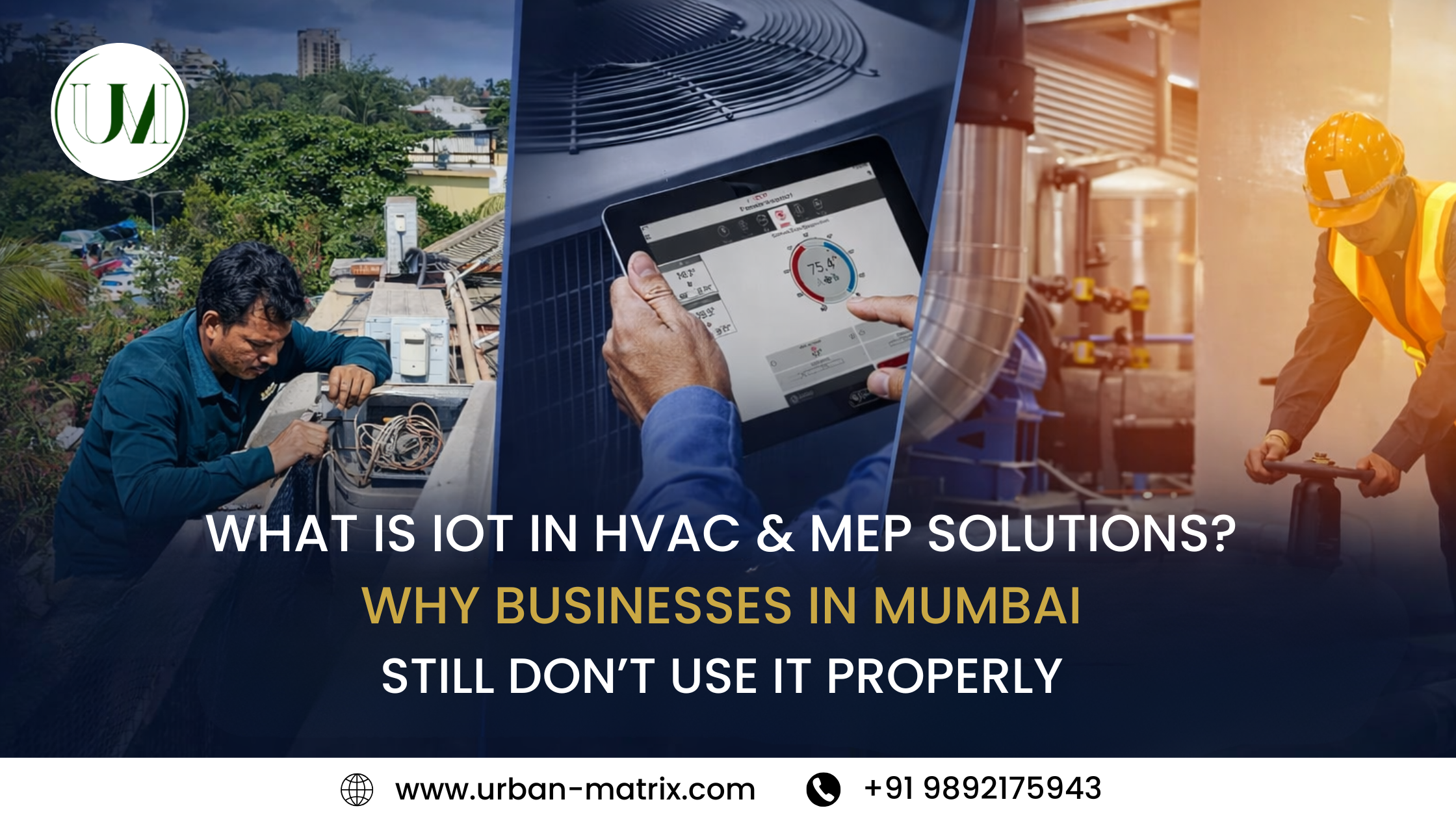
What is IoT in HVAC & MEP Solutions? Why Businesses in Mumbai Still Don’t Use It Properly (2026 Guide).
What is IoT in HVAC & MEP Solutions? Why Businesses in Mumbai Still Don’t Use It Properly (2026 Guide). Most businesses today invest heavily in infrastructure offices, malls, hospitals, and commercial buildings. But here’s a common problem: they still operate HVAC and MEP systems reactively, not intelligently. Breakdowns happen unexpectedly. Energy bills keep rising. Maintenance teams are always “fixing” instead of preventing issues. Now, with HVAC, MEP & IoT SOLUTIONS, businesses have the opportunity to shift from reactive maintenance to data-driven decision-making. Yet, surprisingly, many companies in Mumbai still don’t fully understand or implement IoT correctly. Why?Because IoT is often misunderstood as just “automation” instead of a complete smart infrastructure solution. In this guide, we’ll break down everything in simple terms, how IoT works in HVAC & MEP, why adoption is slow, and how businesses in Mumbai can actually benefit from it. IoT in HVAC & MEP solutions refers to the use of smart sensors, connected devices, and real-time data to monitor, control, and optimize building systems. It enables predictive maintenance, energy efficiency, and better performance. However, many businesses in Mumbai fail to use it properly due to lack of awareness, poor integration, and reliance on traditional maintenance practices. What is IoT in HVAC and MEP Solutions? IoT (Internet of Things) in HVAC and MEP solutions means connecting systems like air conditioning, electrical, plumbing, and fire safety through smart sensors and connected devices. These devices collect real-time data and send it to a centralized platform for monitoring and control. Instead of guessing system performance, businesses can now rely on real-time monitoring HVAC systems to make informed decisions. Simple Example: This is how IoT-enabled maintenance replaces traditional reactive servicing. Why Are Businesses Not Using IoT in MEP Services? Even with clear benefits, adoption is still low. Key Reasons: How Does IoT Work in HVAC Systems? (Step-by-Step) Understanding this is key to adoption. Step-by-Step Process: Example Use Case: In commercial HVAC maintenance Mumbai, IoT can detect inefficiencies before they impact comfort or cost. What Are the Benefits of IoT in Building Management? IoT brings measurable impact. Key Benefits: Real Impact: Businesses using smart HVAC solutions Mumbai report lower downtime and better ROI. IoT vs Traditional HVAC & MEP Maintenance Feature Traditional Maintenance IoT-Based Maintenance Approach Reactive Predictive Monitoring Manual Real-time Downtime High Low Cost Unpredictable Controlled Efficiency Limited Optimized Decision Making Experience-based Data-driven Who Needs HVAC, MEP & IoT Solutions? This is not for everyone but critical for certain sectors. Ideal Users: Especially in Mumbai, where commercial building maintenance Mumbai is complex, IoT becomes essential. Cost & Pricing Factors of IoT Integration Cost varies based on multiple factors. Key Factors: Important Insight: While initial cost may seem high, IoT reduces long-term expenses through predictive maintenance for commercial HVAC systems using IoT. Industry Trends in 2026 IoT is evolving rapidly. Key Trends: Insight: The future of integrated MEP facility management Mumbai will be fully IoT-driven. Why Choose Urban Matrix in Mumbai? When it comes to HVAC, MEP & IoT SOLUTIONS, choosing the right partner matters. Why Urban Matrix: Urban Matrix doesn’t just maintain systems they optimize them using smart building automation solutions Mumbai. FAQs 1. What is IoT in HVAC and MEP solutions? IoT connects HVAC and MEP systems using sensors and data to improve performance, reduce costs, and enable predictive maintenance. 2. How does IoT reduce HVAC maintenance costs? It detects issues early, preventing major breakdowns and reducing repair expenses. 3. Is IoT worth it for commercial HVAC systems? Yes, especially for large buildings where downtime and energy costs are high. 4. What is predictive maintenance in HVAC using IoT? It uses data to predict failures before they happen, ensuring proactive maintenance. 5. Why are businesses slow to adopt IoT in Mumbai? Due to lack of awareness, cost concerns, and reliance on traditional systems. If your building still relies on reactive maintenance, you’re already losing time and money. It’s time to shift to smarter systems. Partner with Urban Matrix – the trusted IoT solutions provider in MumbaiGet customized HVAC AMC services Mumbai with IoT integrationReduce downtime, save energy, and improve performance Contact Urban Matrix today to transform your building into a smart, efficient system.
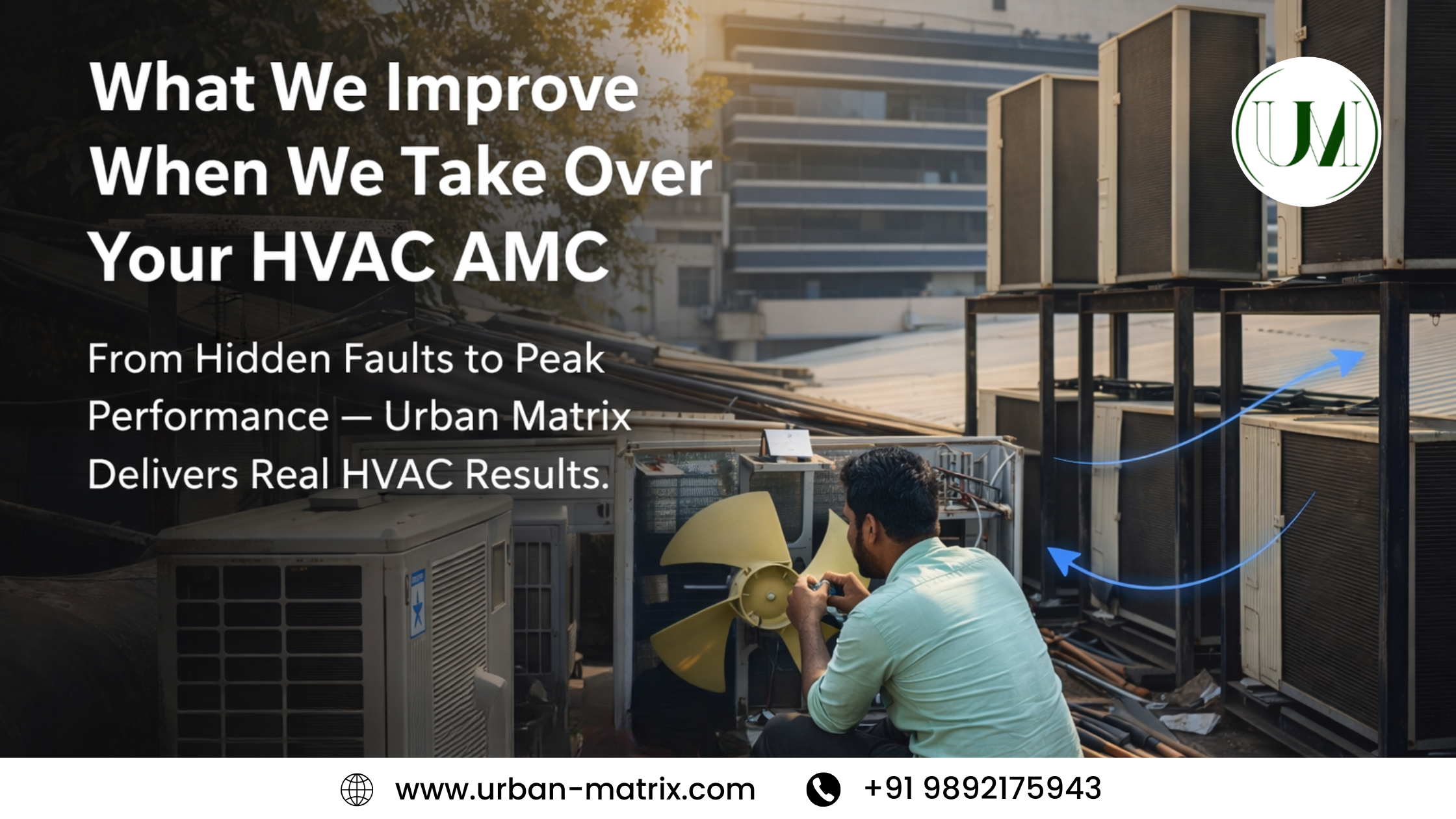
What Do We Commonly Improve When Onboarding a New HVAC AMC Client?
What Do We Commonly Improve When Onboarding a New HVAC AMC Client? When a business signs an HVAC AMC, the expectation is simple smooth cooling, lower energy bills, and zero unexpected breakdowns. But in reality, most systems we inspect tell a different story. At first glance, everything looks fine. The system is “working,” servicing is “done,” and there are “no complaints. Yet, within minutes of inspection, deeper issues start appearing poor airflow, rising electricity consumption, uneven cooling, and hidden stress on critical components. This is where HVAC MEP SOLUTIONS go beyond routine maintenance. At Urban matrix, onboarding a new AMC client is not just about checking equipment it’s about understanding how the system actually performs in real conditions. Through detailed diagnostics, cleaning, and optimization, we transform systems from “just running” to high-performing and efficient assets. When onboarding a new HVAC AMC client, companies typically improve airflow, cooling efficiency, energy consumption, and system reliability. This includes deep cleaning, diagnostics, airflow balancing, and preventive maintenance planning to reduce breakdown risks and enhance long-term HVAC performance. What is HVAC AMC Onboarding in HVAC MEP SOLUTIONS? HVAC AMC onboarding is the initial evaluation and improvement phase when a new client signs an annual maintenance contract. It is designed to assess the true condition of the HVAC system and correct inefficiencies from day one. This process includes: Unlike basic servicing, experienced HVAC MEP contractors in Mumbai focus on optimizing performance, not just maintaining functionality. Why is HVAC AMC Onboarding Important? Many HVAC systems fail not because they are outdated but because they have been maintained superficially. Here are the most common reasons why onboarding is critical: Without proper onboarding, these issues continue silently until a major failure occurs. A proper onboarding process: How Does HVAC AMC Onboarding Work? (Step-by-Step Process) At Urban matrix, onboarding follows a structured, technical approach. 1. System Audit & Inspection We begin with a complete HVAC system health check.Every unit is inspected for performance, airflow, and past maintenance quality. 2. Deep Cleaning & Restoration Dust and dirt are one of the biggest enemies of HVAC efficiency. This step alone significantly improves performance. 3. Performance Optimization Next, we focus on cooling performance optimization HVAC. 4. Diagnostics & Load Analysis We analyze system behavior under load: 5. Preventive Maintenance Setup Finally, we create a structured preventive maintenance HVAC AMC plan. This ensures: Audit → Clean → Optimize → Diagnose → MaintainThis is the foundation of effective commercial HVAC maintenance Mumbai. What Do We Commonly Improve During Onboarding? This is where real transformation happens. 1. Airflow & Cooling Efficiency Many systems suffer from poor airflow in HVAC system. We fix: 2. Energy Efficiency High bills are often linked to inefficiency. We improve: 3. Equipment Health Ignoring early signs leads to major failures. We prevent: 4. System Cleanliness Clean systems perform better. 5. Maintenance Structure Most systems lack proper planning. We implement: Onboarding improves: Benefits of HVAC AMC Onboarding Once onboarding is done correctly, businesses experience immediate and long-term benefits. Better performance. Lower costs. Higher reliability. Preventive vs Reactive HVAC Maintenance Factor Preventive Maintenance Reactive Maintenance Approach Planned and scheduled Emergency-based Cost Lower over time Higher due to repairs Downtime Minimal High Efficiency Optimized Reduced Equipment Life Longer Shorter Preventive maintenance protects your system.Reactive maintenance only fixes problems after damage. Who Needs HVAC AMC Onboarding? This service is essential for: Especially businesses seeking: Cost & Pricing Factors of HVAC AMC The cost of an AMC depends on multiple factors: Key Insight: The cost of HVAC breakdown in business can be significantly higher than AMC investment. AMC is not a cost it’s a cost-saving strategy. Industry Trends in 2026 (HVAC MEP SOLUTIONS) The HVAC industry is shifting towards smarter and more efficient systems. Key trends include: Future HVAC = Smart, efficient, and predictive. Why Choose Urban matrix for HVAC MEP SOLUTIONS in Mumbai? Choosing the right AMC partner is critical. At Urban matrix, we focus on performance-driven solutions. Our strengths: We don’t just maintain HVAC systems we improve them from the ground up. With Urban matrix, your HVAC system becomes more efficient, reliable, and cost-effective. FAQs 1. What is HVAC AMC? An HVAC AMC is a service contract that includes regular maintenance, inspection, and performance optimization of HVAC systems. 2. Why is HVAC maintenance important? It ensures efficient performance, reduces breakdown risks, and lowers energy consumption. 3. How often should HVAC be serviced? Commercial systems should be serviced quarterly or based on usage intensity. 4. What happens without HVAC maintenance? The system becomes inefficient, consumes more energy, and may fail unexpectedly. 5. What is included in HVAC AMC services? It includes inspection, cleaning, diagnostics, repairs, and preventive maintenance planning. If your HVAC system is running but not performing it’s time to take action. Don’t wait for a breakdown to realize the gaps. Upgrade to expert HVAC MEP SOLUTIONS in MumbaiGet reliable commercial HVAC maintenance MumbaiWork with trusted HVAC MEP contractors in Mumbai Contact Urban matrix today and ensure your HVAC system performs at its best every single day.
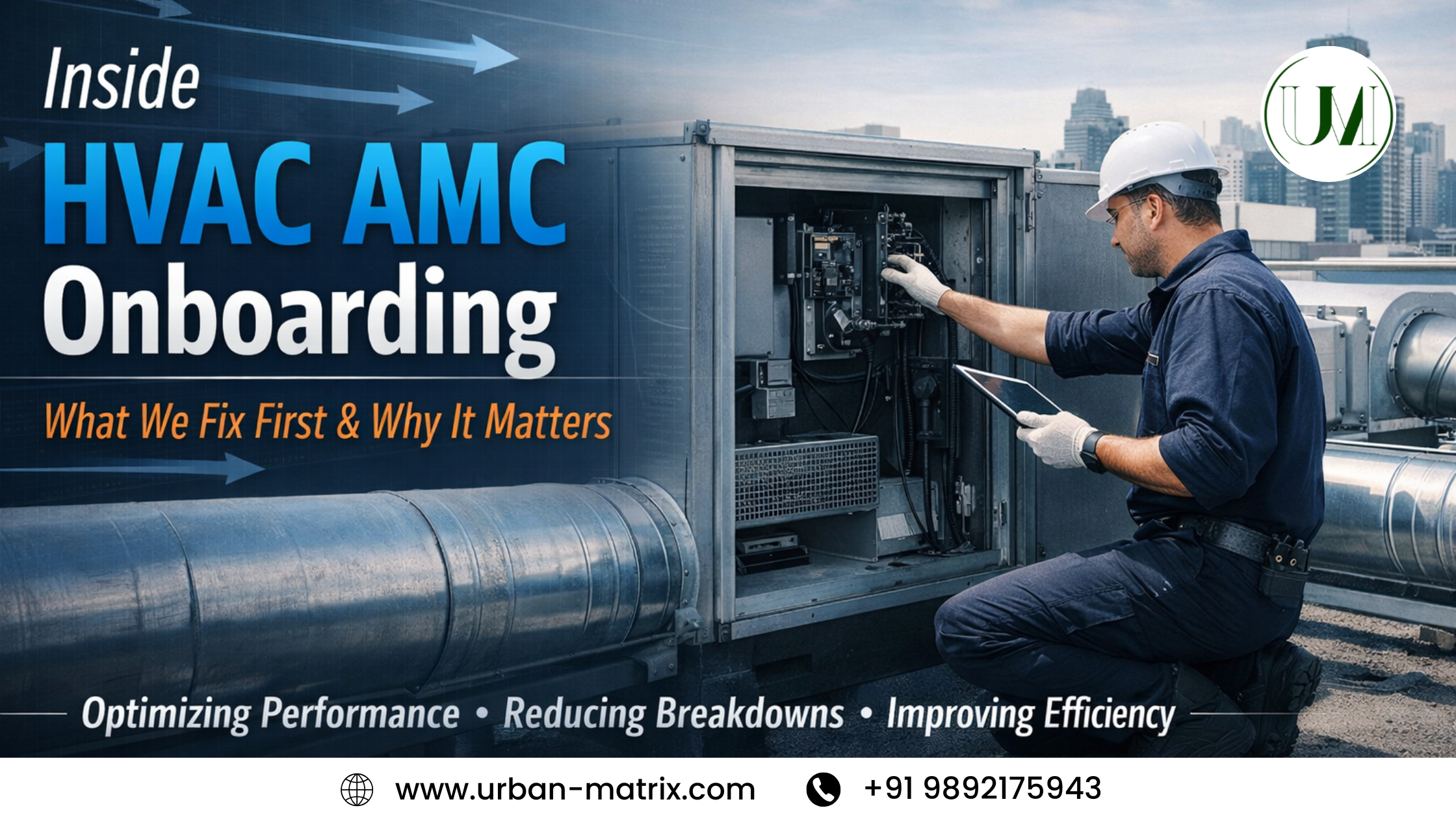
What Happens Inside HVAC AMC Onboarding: What Do We Fix First (And Why It Matters)?
What Happens Inside HVAC AMC Onboarding: What Do We Fix First (And Why It Matters)? In most commercial buildings, HVAC systems are treated like a background function. As long as cooling is working, everything feels fine. But when we onboard a new client in Mumbai, we usually see a different reality. The system is running… but not efficiently.Cooling exists… but not balanced.Energy is being used… but not controlled. These are silent problems. They don’t show immediately but over time, they increase costs, reduce equipment life, and lead to sudden breakdowns. This is where HVAC MEP SOLUTIONS make a real difference. Because onboarding is not just about maintenance.It’s about fixing what was never optimized. HVAC AMC onboarding focuses on identifying airflow issues, energy inefficiencies, and maintenance gaps. Through audits and preventive strategies, HVAC MEP SOLUTIONS improve cooling performance, reduce breakdowns, and optimize system efficiency, especially in commercial HVAC maintenance Mumbai. What is HVAC AMC Onboarding? HVAC AMC onboarding is the process of evaluating and improving a system when a new maintenance contract begins. It is not routine servicing. It is a structured process where HVAC MEP contractors in Mumbai: The goal is simple make the system perform better from day one. Why HVAC AMC Onboarding is Important Most systems already have issues before onboarding. They are just not visible. Common problems we find: These issues slowly affect comfort, cost, and reliability. Without proper onboarding, HVAC systems keep running inefficiently and problems keep growing silently. How HVAC AMC Onboarding Works Here’s how a structured onboarding process looks: 1. System Audit 2. Diagnostics 3. Cooling Optimization 4. Energy Optimization 5. Preventive Planning 6. Performance Monitoring Onboarding shifts HVAC from “running” to “performing efficiently. What Do We Fix First? This is the most critical part. 1. Airflow Issues 2. Energy Loss 3. Maintenance Gaps 4. System Overload 5. Risk Factors We focus on root problems first not surface-level fixes. Benefits of HVAC AMC Onboarding For businesses, the impact is immediate. This is why commercial HVAC maintenance services are critical for business continuity. HVAC AMC vs Reactive Maintenance Factor AMC Approach Reactive Approach Maintenance Style Preventive Emergency-based Cost Predictable Unpredictable Performance Optimized Inconsistent Downtime Low High Equipment Life Longer Shorter AMC prevents problems. Reactive maintenance only responds to them. Who Needs HVAC AMC Onboarding? This is essential for: Especially for businesses looking for HVAC maintenance for commercial buildings Mumbai, onboarding ensures smooth operations. Cost Factors Pricing depends on: But the real value comes from: AMC reduces long-term costs even if it looks like an upfront expense. Industry Trends in 2026 HVAC is becoming smarter and more data-driven. Key trends: Businesses are moving from reactive to proactive systems. Why Choose Urban matrix in Mumbai When it comes to MEP maintenance services in Mumbai, execution matters. At Urban matrix, we focus on: As a reliable HVAC contractor in Mumbai, we don’t just maintain systems—we improve them. Urban matrix focuses on performance—not just maintenance. FAQs What happens during HVAC AMC onboarding? It includes audit, diagnostics, airflow correction, and preventive planning. How does HVAC AMC improve performance? By fixing inefficiencies and optimizing system operation. Is HVAC AMC necessary for commercial buildings? Yes, it ensures efficiency, reliability, and cost control. How often should maintenance be done? Monthly or quarterly, depending on usage. What is the biggest benefit? Reduced breakdowns and better system performance. Your HVAC system is working. But is it working efficiently? If you’re facing high energy bills, uneven cooling, or sudden failures it’s time to act. Partner with Urban matrix for reliable HVAC MEP SOLUTIONS. Improve performance Reduce downtime Optimize costs Get in touch today and upgrade your HVAC system from maintenance to performance.

HVAC and MEP Solutions: Risk of Late AMC Renewal.
In a fast-moving city like Mumbai, buildings are expected to perform flawlessly every single day. Whether it’s a corporate office in Andheri, a hospital in Malad, or a retail space in Goregaon, uninterrupted operations depend heavily on efficient HVAC MEP SOLUTIONS. These systems regulate temperature, ensure proper ventilation, manage electrical infrastructure, and support overall building performance. However, one of the most overlooked yet critical aspects of maintaining these systems is the timely renewal of AMC (Annual Maintenance Contract). Many businesses delay this process due to budget approvals, operational distractions, or simply underestimating its importance. What seems like a minor delay often leads to major compromises. Last-minute AMC renewals force facility managers into rushed decisions. There is little time to evaluate vendors, assess system performance, or plan preventive maintenance schedules. As a result, systems operate inefficiently, energy costs rise, and unexpected breakdowns become more frequent. In Mumbai’s demanding climate where humidity, pollution, and continuous usage strain HVAC systems delayed maintenance can quickly escalate into serious operational risks. For businesses relying on HVAC services in Mumbai and MEP maintenance services in Mumbai, timely AMC planning is not just a best practice it is a necessity. What is Last-Minute AMC Renewal in HVAC and MEP Solutions? A last-minute AMC renewal refers to renewing your maintenance contract just before its expiry or after it has already lapsed, without proper planning or system evaluation. In HVAC MEP SOLUTIONS, an AMC is designed to provide structured and preventive care for building systems. It includes routine inspections, scheduled servicing, and timely repairs to ensure optimal performance. When AMC renewals are delayed, businesses shift from a preventive vs reactive maintenance HVAC approach. Instead of identifying and fixing issues early, they end up responding to breakdowns after they occur. This reactive approach negatively impacts building operations and maintenance, especially in commercial environments where HVAC systems operate continuously. Mini Summary Why Do Last-Minute AMC Renewals Happen? (Causes & Importance) Common Causes Why It Becomes a Problem In a city like Mumbai, where systems operate under constant pressure, even a short delay can disrupt operations significantly. Mini Summary Delays in planning directly lead to compromised system performance and higher operational risks. How Last-Minute AMC Renewals Affect HVAC & MEP Systems (Step-by-Step) 1. AMC Expiry The system operates without maintenance support, leading to unnoticed issues. 2. Emergency Renewal Decisions are made under pressure, often without proper evaluation. 3. Compromised Vendor Selection Businesses settle for available vendors instead of the best HVAC maintenance company Mumbai. 4. Skipped Preventive Maintenance No time for system audits or optimization, affecting performance. 5. Increased Downtime Systems fail unexpectedly, especially during peak hours, causing HVAC downtime during peak hours Mumbai. Mini Summary Late AMC renewal creates a chain reaction that leads to inefficiency and system breakdown. What Are the Risks of Delayed HVAC AMC Renewals? Studies show that reactive maintenance can cost up to 40% more than preventive maintenance. Mini Summary Delaying AMC increases both financial and operational risks. Benefits of Timely AMC Renewal (Why It Matters) Timely AMC renewals also contribute to better HVAC system efficiency optimization and long-term performance. Mini Summary Timely AMC ensures efficiency, savings, and peace of mind. Comparison: Timely AMC vs Last-Minute Renewal Factor Timely AMC Renewal Last-Minute AMC Renewal Planning Proactive Reactive Vendor Selection Wide options Limited options Maintenance Preventive Reactive Cost Controlled High Efficiency Optimized Reduced Risk Low High Mini Summary Proactive planning always delivers better results than reactive decisions. Who is a Good Candidate / Who Needs This? Any organization relying on building maintenance services Mumbai or commercial building HVAC maintenance Mumbai must prioritize AMC renewals. Mini Summary If your building depends on HVAC systems, AMC is essential. Cost / Pricing Factors of HVAC AMC in Mumbai The cost of HVAC AMC in Mumbai depends on several factors: Hidden Costs of Delayed AMC Mini Summary Delaying AMC increases long-term expenses significantly. Industry Trends in 2026 The future of HVAC MEP SOLUTIONS is becoming smarter and more data-driven. Key Trends Businesses are increasingly adopting smart maintenance strategies for buildings to improve efficiency and reduce risks. Mini Summary The industry is moving toward predictive and intelligent maintenance systems. Why Choose Urban matrix in Mumbai Choosing the right partner is crucial for maintaining efficient systems. Urban matrix offers: With strong experience in commercial HVAC maintenance Mumbai, Urban matrix ensures long-term system performance and reliability. Mini Summary Urban matrix delivers reliable, efficient, and proactive maintenance solutions. FAQs (People Also Ask) 1. What happens if AMC is not renewed on time? Systems operate without maintenance, leading to breakdowns and higher costs. 2. Is HVAC AMC mandatory for commercial buildings? It may not always be legally required but is essential for efficient operations. 3. How often should HVAC maintenance be done? Typically every 3–6 months depending on system usage. 4. What is included in HVAC AMC services? Inspection, cleaning, servicing, repairs, and performance optimization. 5. Why do HVAC systems fail without maintenance? Due to dust buildup, wear and tear, and lack of preventive checks. Don’t let delayed AMC renewals affect your building performance. If your business depends on HVAC MEP SOLUTIONS in Mumbai, proactive maintenance is the key to success. Partner with Urban matrix for reliable AMC solutions Avoid unexpected breakdowns and costly repairs Ensure efficient and uninterrupted operations
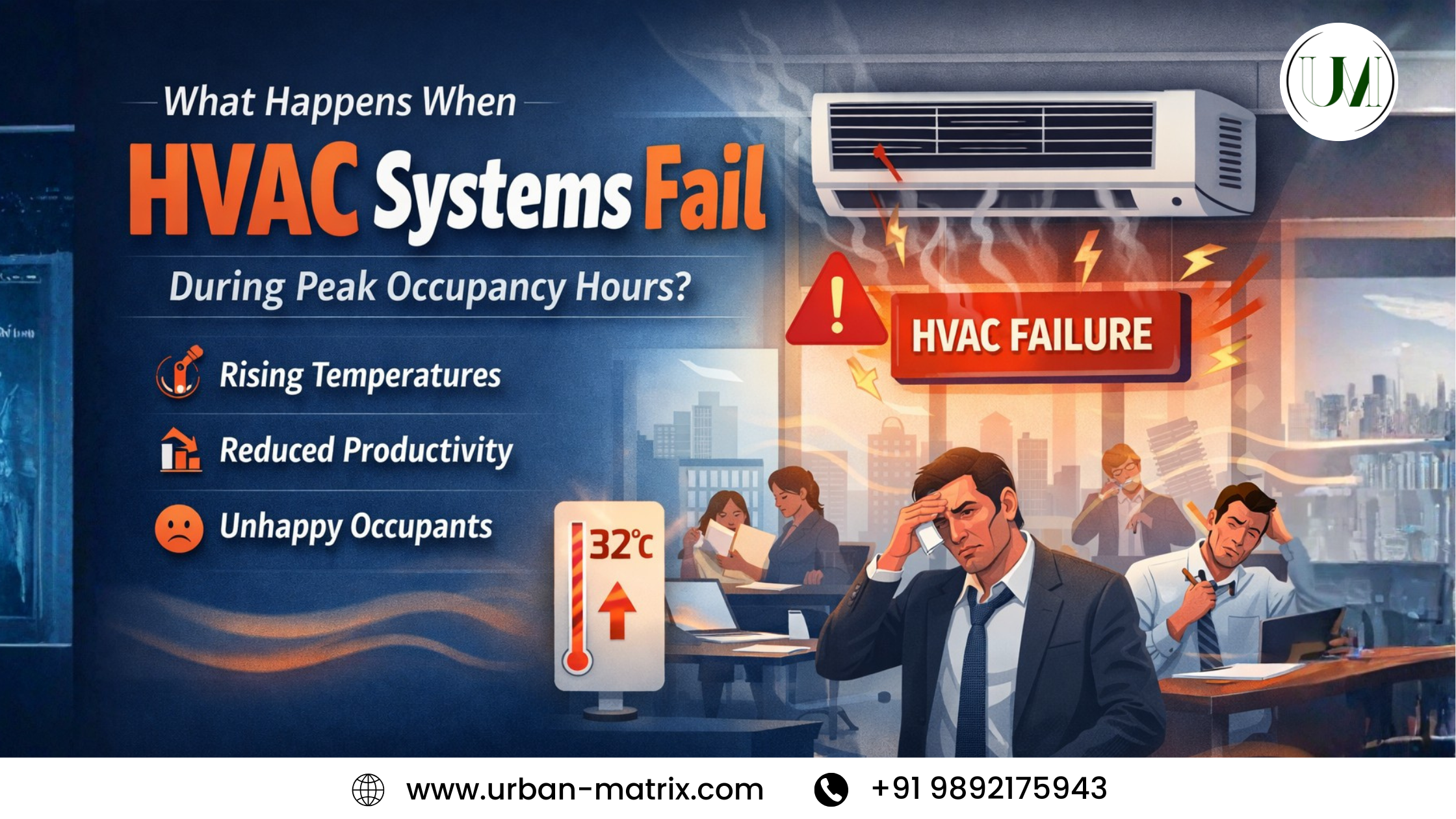
What Happens When HVAC Systems Fail During Peak Occupancy Hours?
Imagine a busy commercial building in Mumbai during peak working hours. Employees are in meetings, customers are visiting offices, and operations are running at full capacity. Suddenly, the HVAC system stops working. Within minutes, the indoor environment becomes uncomfortable. Temperatures rise, humidity increases, and productivity drops. For facilities like malls, hospitals, offices, hotels, or data centers, an HVAC failure during peak occupancy hours can create serious operational disruption. Mumbai’s climate makes the situation even more challenging. High humidity levels and dense commercial infrastructure mean HVAC systems work continuously to maintain indoor comfort and air quality. When these systems fail, the consequences are not limited to discomfort – they can affect equipment, employee productivity, and even customer experience. This is where HVAC MEP SOLUTIONS in Mumbai become essential. With proper planning, preventive maintenance, and monitoring, businesses can reduce the risk of sudden HVAC breakdowns. Companies offering HVAC MEP contractors in Mumbai and MEP maintenance services in Mumbai help commercial facilities maintain system reliability. In this article, we will explore what happens when HVAC systems fail during peak occupancy hours and how professional maintenance strategies can prevent costly disruptions. When HVAC systems fail during peak occupancy hours, indoor temperatures rise quickly, ventilation decreases, and occupants experience discomfort. Businesses may face operational disruption, productivity loss, and equipment risks. Preventive maintenance through HVAC MEP SOLUTIONS and commercial HVAC maintenance Mumbai services helps reduce breakdown risks and ensures consistent building performance. What Happens When HVAC Systems Fail During Peak Occupancy Hours? HVAC failure during peak occupancy means the heating, ventilation, and air conditioning system stops functioning while the building is operating at maximum capacity. This situation can lead to immediate environmental imbalance within the building. Common impacts include: In cities like Mumbai, where commercial buildings rely heavily on climate control, HVAC downtime can quickly affect operations. Professional HVAC MEP SOLUTIONS focus on system monitoring, preventive inspections, and performance optimization to ensure systems continue operating efficiently during peak hours. Mini Summary What Causes HVAC Failures During Peak Occupancy? Several factors contribute to HVAC system failures, especially in commercial buildings operating continuously. Common causes include: • Lack of preventive maintenance• Clogged air filters restricting airflow• Refrigerant leakage in cooling systems• Electrical faults in control panels• Overloaded HVAC equipment during peak demand• Poor ventilation design• Aging mechanical components In many commercial facilities, HVAC systems run for long hours without proper inspection. Over time, small issues grow into system failures. Regular inspections through MEP maintenance services in Mumbai help detect these problems early and avoid sudden breakdowns. Mini Summary Most HVAC failures occur due to poor maintenance, aging components, and excessive load. Preventive service helps detect issues before they cause system shutdowns. How Preventive HVAC MEP Solutions Work Preventive HVAC maintenance follows a structured process to ensure the system operates efficiently during high-demand periods. Typical process followed by professional HVAC MEP contractors in Mumbai: 1. System Inspection Technicians examine: 2. Performance Monitoring Sensors and monitoring systems track: 3. Cleaning and Servicing Routine maintenance includes: 4. Predictive Maintenance Advanced monitoring helps identify early warning signs before major failure occurs. 5. Scheduled Servicing Commercial HVAC systems require periodic servicing to maintain optimal performance. Mini Summary Preventive maintenance combines inspection, monitoring, and scheduled servicing to ensure HVAC systems operate efficiently during peak hours. Benefits of Preventive HVAC MEP Solutions Businesses that invest in HVAC MEP SOLUTIONS gain several operational advantages. Key benefits include: • Reduced risk of system breakdown• Consistent indoor temperature control• Improved energy efficiency• Lower long-term repair costs• Increased equipment lifespan• Better indoor air quality• Improved workplace productivity According to industry studies, preventive HVAC maintenance can reduce emergency repair costs by up to 30 – 40% in commercial facilities. This is why many organizations in Mumbai rely on commercial HVAC maintenance Mumbai services to maintain operational reliability. Mini Summary Preventive HVAC maintenance improves efficiency, reduces repair costs, and ensures a comfortable indoor environment for building occupants. HVAC Emergency Repairs vs Preventive Maintenance Factor Emergency HVAC Repair Preventive HVAC Maintenance Cost Usually higher due to urgent service Lower long-term operational cost Downtime Often causes business disruption Minimal downtime System lifespan Components wear out faster Longer equipment life Energy efficiency Lower efficiency Optimized performance Risk level High risk of sudden failure Reduced risk through monitoring Preventive maintenance through HVAC MEP SOLUTIONS helps avoid costly emergency repairs and operational disruptions. Who Needs Professional HVAC MEP Solutions? Many commercial facilities depend heavily on reliable HVAC systems. Organizations that benefit the most include: • Corporate office buildings• Hospitals and healthcare facilities• Hotels and hospitality spaces• Shopping malls• Data centers• Educational institutions• Industrial facilities Any building with large occupancy levels must ensure HVAC systems operate efficiently. This is why many facility managers partner with HVAC MEP contractors in Mumbai for reliable system maintenance. Mini Summary Large commercial buildings with high occupancy rely on professional HVAC maintenance to ensure comfort, safety, and operational efficiency. HVAC Maintenance Cost Factors in Mumbai The cost of HVAC maintenance depends on several factors. Important pricing considerations include: • Size of the building• HVAC system capacity• Number of air handling units• Complexity of duct systems• Frequency of maintenance visits• Age of HVAC equipment Commercial facilities in Mumbai often choose annual maintenance contracts to ensure consistent system performance and predictable costs. Professional MEP maintenance services in Mumbai typically offer customized service plans depending on building requirements. HVAC Industry Trends in 2026 The HVAC industry is rapidly evolving with technology-driven solutions. Key trends shaping commercial HVAC systems include: • Smart building automation systems• AI-based predictive maintenance• Energy-efficient HVAC equipment• IoT monitoring systems for real-time performance tracking• Sustainable cooling technologies Many companies now integrate HVAC MEP SOLUTIONS with building management systems to monitor system health and energy consumption. These innovations help facility managers maintain consistent indoor environments even during peak occupancy. Why Choose Urban Matrix in Mumbai? Urban Matrix is a trusted provider of commercial HVAC MEP SOLUTIONS in Mumbai. Our approach focuses on proactive system management rather than reactive repairs. What makes Urban Matrix different: • Experienced HVAC MEP contractors in Mumbai• Preventive

How Reactive HVAC Maintenance Increases Downtime & Operational Costs
In commercial buildings, HVAC systems are the backbone of comfort, productivity, and operational stability. However, many facilities still rely on a reactive maintenance approach fixing problems only after they occur. At Urban Matrix, we often see how this approach increases downtime and expenses. Businesses that invest in HVAC AND MEP SOLUTIONS focused on proactive planning experience significantly lower operational risks and smoother facility management. Reactive maintenance may appear cost effective initially because it avoids scheduled servicing costs. But in reality, waiting for a system to fail often leads to unexpected breakdowns, tenant discomfort, and emergency repair expenses. A single HVAC failure in a commercial building can interrupt business operations, delay productivity, and even impact customer experience. Another hidden cost of reactive maintenance is extended downtime. When a major HVAC component fails unexpectedly, sourcing replacement parts and arranging urgent technical support can take hours—or even days. During this time, building environments become uncomfortable and operational workflows are disrupted. A structured commercial HVAC maintenance strategy helps detect small issues before they escalate into major system failures. Reactive maintenance also accelerates equipment wear and reduces system lifespan. Without routine inspections and calibration, components such as compressors, coils, and air handlers operate under higher stress. Over time, this leads to frequent breakdowns and expensive replacements. Implementing preventive HVAC maintenance for commercial buildings ensures that systems run efficiently while reducing long-term capital expenditure. At Urban Matrix, we believe that modern facilities require smarter maintenance strategies rather than emergency repairs. Investing in HVAC AND MEP SOLUTIONS that focus on predictive monitoring, scheduled servicing, and system optimization helps businesses reduce downtime, control operational costs, and maintain reliable building performance.
What Facility Managers Must Expect from Their HVAC AMC Partners
Facility managers today need more than routine servicing from their AMC partners. They need a team that truly understands HVAC AND MEP SOLUTIONS and how they impact overall building performance, energy efficiency, and occupant comfort. A reliable HVAC AMC partner should focus on preventive maintenance instead of waiting for breakdowns. Structured inspections, seasonal servicing, and performance checks help reduce downtime and avoid costly disruptions in commercial spaces. Transparency is equally important. Clear service schedules, defined response times, and proper reporting should be standard. A provider offering End to End MEP services for commercial buildings must deliver measurable results, not just promises. Technical expertise across integrated systems is essential. Modern buildings connect HVAC with electrical, ventilation, and automation systems. Strong HVAC AND MEP SOLUTIONS ensure all components work together efficiently. Energy optimization should also be a priority. A professional team under a commercial HVAC maintenance contract must actively suggest improvements that reduce operational costs while maintaining comfort. Ultimately, facility managers should expect accountability, proactive planning, and data-driven insights from their AMC partners. The right partnership protects assets, improves efficiency, and keeps commercial buildings running smoothly.