
When planning a commercial or residential building, one of the biggest decisions developers make happens long before construction begins—choosing the right HVAC and MEP solutions.
Many developers often use HVAC and MEP interchangeably. While HVAC is a critical part of a building, it is not the same as MEP. Understanding the difference between HVAC and MEP systems can directly impact construction cost, operational efficiency, energy bills, and long-term asset value.
This guide breaks down HVAC vs MEP systems in simple terms and explains why developers, architects, and project owners must understand both—especially when planning large projects in Mumbai and other Indian metros.
What Is HVAC? Explained for Developers
HVAC stands for Heating, Ventilation, and Air Conditioning.
It focuses specifically on indoor climate control and air quality.
Core Functions of HVAC Systems
- Regulating indoor temperature
- Managing humidity levels
- Ensuring fresh air circulation
- Removing heat, dust, and airborne pollutants
Where HVAC Is Used
- Office buildings
- Hospitals and healthcare facilities
- Hotels and malls
- Data centers
- Industrial and manufacturing units
In simple terms, HVAC ensures that occupants feel comfortable and that equipment operates in controlled environmental conditions.
What Are MEP Systems? A Broader Building Framework
MEP stands for Mechanical, Electrical, and Plumbing systems..
Components of MEP Systems
Mechanical
- HVAC systems
- Ventilation and exhaust systems
- Fire suppression and smoke extraction
Electrical
- Power distribution
- Transformers and substations
- Lighting systems
- Backup power (DG sets, UPS)
- Low-voltage systems (BMS, CCTV, access control)
Plumbing
- Water supply and drainage
- Sewer and waste management
- Rainwater harvesting
- Firefighting piping
- STP and WTP systems
MEP systems work together to make a building functional, safe, and compliant.
Why Developers Must Understand the Difference
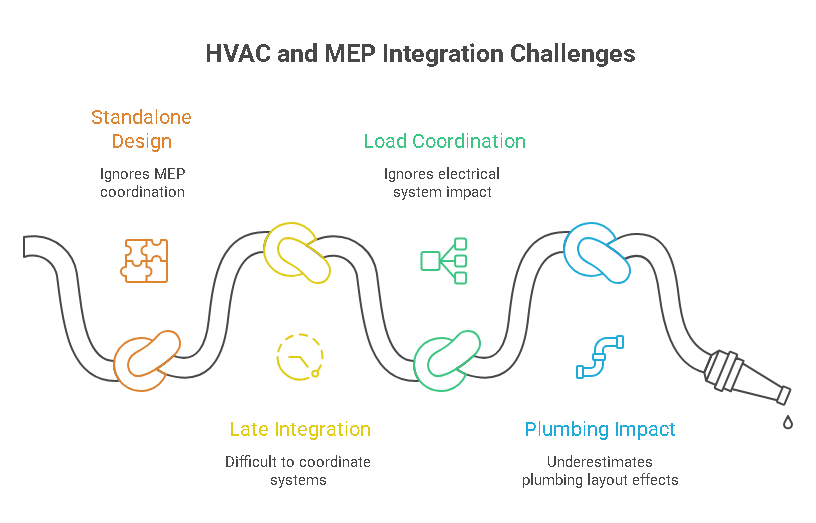
Many cost overruns and operational failures happen because HVAC is designed without proper MEP coordination.
Common Developer Mistakes
- Treating HVAC as a standalone system
- Late-stage MEP integration
- Ignoring load coordination between HVAC and electrical systems
- Underestimating plumbing impact on mechanical layouts
A building may look perfect on drawings, but poor HVAC and MEP integration can lead to:
- High electricity consumption
- Frequent system breakdowns
- Poor indoor comfort
- Regulatory non-compliance
HVAC and MEP Solutions: Why Integrated Design Matters
Modern buildings demand integrated HVAC and MEP solutions, not fragmented systems.
Benefits of Integrated HVAC and MEP Engineering
- Optimized energy consumption
- Better space utilization
- Lower operating costs
- Smooth approvals and compliance
- Longer equipment lifespan
At Urban Matrix, we focus on end-to-end HVAC and MEP solutions that align architectural intent with real-world performance.
HVAC vs MEP for Commercial Projects in India
In Indian conditions—especially in cities like Mumbai—buildings face:
- High humidity
- Dense occupancy
- Rising energy costs
- Strict fire and safety norms
Here, HVAC design alone is not enough.
MEP coordination ensures:
- HVAC loads match electrical capacity
- Plumbing layouts don’t conflict with ducting
- Fire systems integrate with ventilation logic
This is why HVAC and MEP solutions in Mumbai must be designed together from day one.
Which One Do Developers Actually Need: HVAC or MEP?
The answer is both—but with the right approach.
Choose HVAC When:
- You are upgrading an existing building
- The project scope is limited to cooling or ventilation
- MEP systems already exist
Choose Full MEP Solutions When:
- Developing a new commercial or residential project
- Planning hospitals, malls, hotels, or IT parks
- Seeking long-term operational efficiency
For most large projects, complete HVAC and MEP solutions deliver better ROI than isolated system upgrades.
Long-Term Cost Impact: HVAC vs MEP Decisions
Poor early decisions in HVAC and MEP planning can increase:
- Energy costs by 20–40%
- Maintenance expenses year after year
- Tenant complaints and vacancy rates
Smart developers treat HVAC and MEP as strategic investments, not cost centers.
Why Developers Trust Professional HVAC and MEP Consultants
Experienced HVAC and MEP consultants help developers:
- Avoid over-design and under-design
- Optimize capital and operational costs
- Ensure compliance with NBC, local fire norms, and energy codes
- Deliver buildings that perform as promised
Urban Matrix specializes in HVAC and MEP solutions for commercial buildings, helping developers bridge the gap between drawings and real-world performance.
FAQs: HVAC vs MEP Systems (AEO Optimized)
Is HVAC part of MEP?
Yes. HVAC falls under the Mechanical (M) component of MEP systems.
Which is more important HVAC or MEP?
MEP is broader and includes HVAC. Both are equally important for building performance.
Do residential projects need full MEP systems?
Yes. Modern residential projects require integrated HVAC and MEP planning for safety, efficiency, and approvals.
Why are HVAC and MEP solutions important in Mumbai?
Due to humidity, high occupancy, power loads, and strict safety regulations, integrated HVAC and MEP solutions are essential.
Final Thoughts: HVAC vs MEP Is Not a Comparison—It’s a Combination
HVAC and MEP are not competing systems.
They are interdependent building lifelines.
Developers who understand this difference early:
- Reduce risk
- Improve building performance
- Protect long-term asset value
If you are planning your next project and want future-ready HVAC and MEP solutions, Urban Matrix is here to help.
Ready to Build Smarter?
Talk to Urban Matrix for expert HVAC and MEP solutions tailored for commercial and residential developments in Mumbai and across India.