

In commercial buildings, HVAC systems are the backbone of comfort, productivity, and operational stability. However, many facilities still rely on a reactive maintenance approach fixing problems only after they occur. At Urban Matrix, we often see how this approach increases downtime and expenses. Businesses that invest in HVAC AND MEP SOLUTIONS focused on proactive planning experience significantly lower operational risks and smoother facility management.
Reactive maintenance may appear cost effective initially because it avoids scheduled servicing costs. But in reality, waiting for a system to fail often leads to unexpected breakdowns, tenant discomfort, and emergency repair expenses. A single HVAC failure in a commercial building can interrupt business operations, delay productivity, and even impact customer experience.
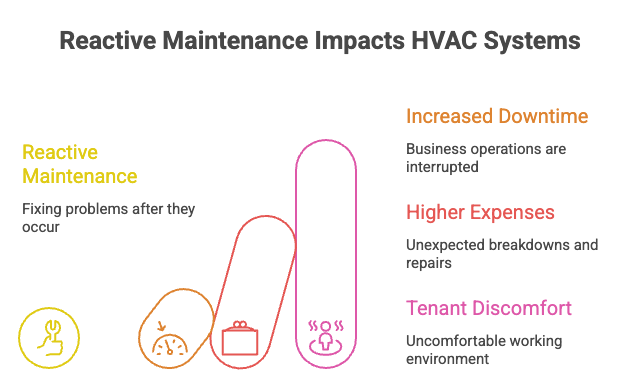
Another hidden cost of reactive maintenance is extended downtime. When a major HVAC component fails unexpectedly, sourcing replacement parts and arranging urgent technical support can take hours—or even days. During this time, building environments become uncomfortable and operational workflows are disrupted. A structured commercial HVAC maintenance strategy helps detect small issues before they escalate into major system failures.
Reactive maintenance also accelerates equipment wear and reduces system lifespan. Without routine inspections and calibration, components such as compressors, coils, and air handlers operate under higher stress. Over time, this leads to frequent breakdowns and expensive replacements. Implementing preventive HVAC maintenance for commercial buildings ensures that systems run efficiently while reducing long-term capital expenditure.
At Urban Matrix, we believe that modern facilities require smarter maintenance strategies rather than emergency repairs. Investing in HVAC AND MEP SOLUTIONS that focus on predictive monitoring, scheduled servicing, and system optimization helps businesses reduce downtime, control operational costs, and maintain reliable building performance.